
Table of Contents
Introduction
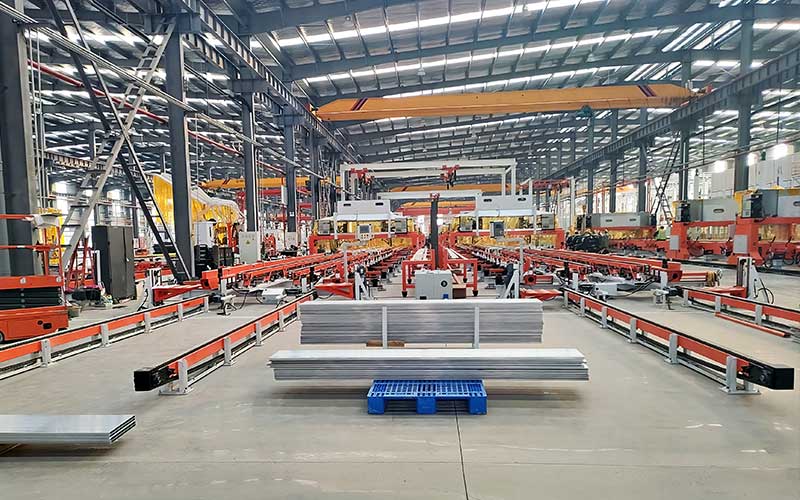
An autonomous guided vehicle is becoming an important part of smart manufacturing because it helps factories move materials, components, fixtures, and finished products with greater consistency. In many industrial workshops, production efficiency is not limited only by machines or operators. It is also affected by how smoothly materials move between cutting, welding, assembly, inspection, storage, and loading areas.
When internal logistics are not well organized, production can slow down even if every workstation is efficient. Workers may spend too much time waiting for parts, moving heavy components, searching for fixtures, or coordinating material flow manually. These hidden delays often create bottlenecks in daily production.
An autonomous guided vehicle helps solve this problem by turning material transport into a more predictable and automated workflow. It can move along planned routes, follow production instructions, connect with workstations, and support continuous manufacturing operations. For factories using robotic welding systems, automated cutting equipment, or intelligent production lines, AGVs can help connect separate production steps into a smoother system.
The key is not simply adding vehicles to a workshop. A reliable AGV project depends on route design, load requirements, navigation accuracy, safety planning, system integration, and real production rhythm.
What Is an Autonomous Guided Vehicle?
An autonomous guided vehicle, often called an AGV, is an automated transport vehicle used to move materials within industrial environments. In manufacturing, it can carry components, pallets, fixtures, tools, semi-finished parts, or finished products between different workstations.
The term is closely related to automated guided vehicle, which refers to a mobile robot that follows markers, wires, magnetic strips, lasers, vision systems, or other navigation methods to move through a facility.
In practical factory use, an autonomous guided vehicle is not only a moving cart. It is part of a wider material handling system. It may include the vehicle body, drive system, battery, controller, sensors, navigation system, traffic management software, safety devices, docking station, and communication interface with production equipment.
The vehicle’s job is simple on the surface: move materials from one point to another. But in a smart manufacturing environment, it also helps coordinate timing, reduce manual transport, improve workflow stability, and support more efficient production planning.
Why Autonomous Guided Vehicles Matter in Industrial Manufacturing
Modern manufacturing is becoming more connected. A single factory may include robotic welding workstations, automatic welding machines, cutting systems, machining areas, assembly stations, inspection points, and storage zones. If materials are still moved manually without a clear system, the whole production flow can become unstable.
An autonomous guided vehicle helps create a structured movement process. Instead of relying only on workers to move materials when they are available, AGVs can follow planned transport tasks. This makes internal logistics easier to organize and easier to improve over time.
Another important value is safety and consistency. Heavy parts, large fixtures, and repeated material transport can create workload pressure for operators. AGVs can reduce unnecessary manual movement and help keep material flow more controlled.
For factories handling steel structures, machinery parts, vehicle components, containers, industrial frames, and welded assemblies, stable material movement is especially important. These products often involve large or heavy parts that need to move through several production stages. An AGV system can help make those movements more predictable.
Main Types of Autonomous Guided Vehicle Systems
Different AGV systems are designed for different production conditions. The right type depends on material weight, transport route, loading method, workshop layout, and the production process.
| AGV Type | Suitable Use | Main Advantage | Key Evaluation Point |
|---|---|---|---|
| Tow-type AGV | Pulling carts or material trailers | Good for batch material movement | Route width and trailer control |
| Forklift-type AGV | Pallet handling and vertical lifting | Useful for warehouse and line-side delivery | Lifting height and pallet consistency |
| Unit load AGV | Carrying boxes, pallets, or fixtures | Stable for workstation-to-workstation transfer | Docking accuracy and loading method |
| Heavy-duty AGV | Large components, steel structures, heavy fixtures | Strong load capacity for industrial workshops | Floor condition and route safety |
| Production line AGV | Connecting process stations | Supports continuous manufacturing flow | System integration and task scheduling |
A good autonomous guided vehicle system should match the real transport task. If the factory needs to move large welded components, a light-duty vehicle may not be enough. If the production line changes frequently, route flexibility and software control become more important.
Common Applications of Autonomous Guided Vehicles
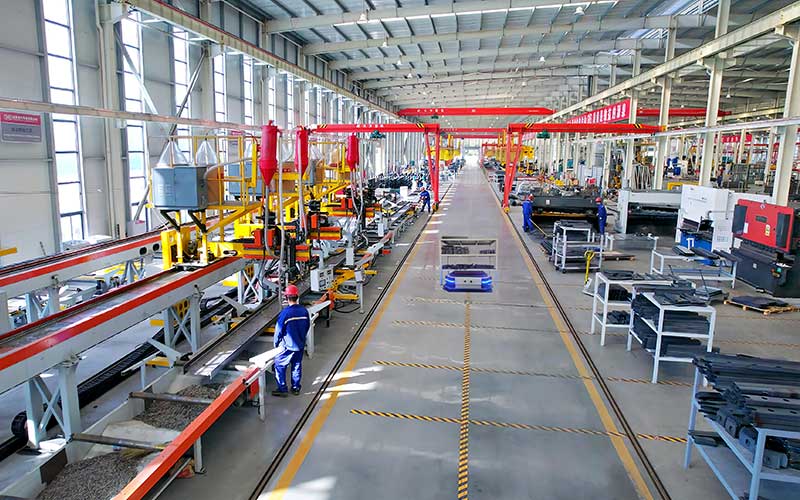
Autonomous guided vehicles are used in many manufacturing environments where materials need to move repeatedly between fixed or semi-fixed locations. Their main value appears when the transport task is frequent, predictable, and closely connected with production rhythm.
Common applications include moving raw materials to cutting areas, transferring parts to robotic welding workstations, delivering fixtures to assembly stations, moving semi-finished components to inspection areas, transporting finished products to storage zones, and supporting line-side material supply.
In intelligent manufacturing projects, AGVs may work together with welding automation products, robotic workstations, automatic welding systems, and production line equipment. This helps create a smoother connection between material flow and welding or assembly operations.
For example, when a welded frame leaves one workstation, an AGV can move it to the next process instead of waiting for manual transport. This reduces idle time and helps keep the production rhythm more stable.
Autonomous Guided Vehicle vs Manual Material Handling
Manual material handling is flexible and easy to start, but it can become difficult to manage when production volume increases or parts become heavier. Workers may need to move materials across long distances, coordinate with multiple stations, and handle repeated transport tasks every day.
An autonomous guided vehicle is more suitable when material flow needs to be stable, repeated, and traceable. Once the routes and tasks are planned, the AGV can perform transport work according to a defined schedule or production signal.
| Comparison Factor | Autonomous Guided Vehicle | Manual Material Handling |
|---|---|---|
| Transport consistency | Follows planned routes and tasks | Depends on operator availability |
| Workflow control | Easier to schedule and standardize | More flexible but less predictable |
| Heavy material movement | Better for repeated heavy-duty transport | Higher physical workload |
| Production coordination | Can connect with workstations and software | Relies on manual communication |
| Safety management | Uses sensors, alarms, and route control | Depends on operator attention |
| Best-fit scenario | Repeated internal logistics | Irregular or low-frequency movement |
The goal is not to remove people from logistics completely. A better approach is to let AGVs handle repeated transport while workers focus on process control, inspection, equipment operation, and production improvement.
Key Factors That Affect AGV Performance
The performance of an autonomous guided vehicle depends on much more than the vehicle itself. A successful AGV project starts with understanding the real workflow.
The first factor is navigation method. Some AGVs use magnetic guidance, while others use laser, visual, or natural feature navigation. The right method depends on route complexity, workshop environment, floor condition, and flexibility requirements.
The second factor is load capacity. The AGV must safely carry the actual material, fixture, or component. Load size, center of gravity, loading direction, and floor condition all affect vehicle design.
Route planning is another key point. The route should avoid unnecessary turns, narrow passages, busy pedestrian areas, and equipment interference. Good route design improves efficiency and reduces safety risks.
Safety system design is essential. AGVs should include obstacle detection, emergency stop functions, warning lights, alarms, speed control, and safe stopping logic. In areas where people and equipment share space, safety planning becomes even more important.
Battery and charging strategy also affect daily operation. If the charging plan is weak, the vehicle may stop at the wrong time and interrupt production. Opportunity charging, automatic charging, or planned charging schedules should be matched with the production rhythm.
System integration determines whether the AGV is just a moving vehicle or part of a smart factory system. A mature AGV solution may connect with workstation signals, warehouse systems, production scheduling, and line control software.
How an Autonomous Guided Vehicle Supports Welding Automation
In welding workshops, material movement is often one of the most overlooked production challenges. Large parts may need to move from cutting to fitting, from fitting to welding, from welding to inspection, and from inspection to storage. If each transfer depends on manual coordination, delays can appear throughout the workflow.
An autonomous guided vehicle can support welding automation by delivering parts to the correct workstation at the right time. It can also help move fixtures, pallets, tooling, and semi-finished assemblies between robotic welding cells and other production areas.
For manufacturers using robotic welding systems, AGVs can reduce waiting time around workstations. A robot may finish welding efficiently, but if the next part is not ready or the finished part is not removed on time, the workstation still loses productivity. AGVs help keep material supply and finished-part transfer more organized.
In flexible production, AGVs can also support product switching. Different workpieces may require different fixtures or transport paths. With proper task scheduling, the AGV system can help move the right material to the right station without relying only on manual instructions.
What a Complete AGV System Should Include
A complete autonomous guided vehicle system should be designed as a material handling solution, not only as a vehicle.
A typical AGV system may include the vehicle body, battery system, navigation sensors, safety sensors, drive controller, lifting or loading mechanism, wireless communication, charging station, traffic control software, route management system, and workstation docking interface.
For production line integration, the system may also include task scheduling, equipment communication, barcode or RFID recognition, production data collection, and connection with factory management software.
The physical environment must also be considered. Floor flatness, turning radius, route width, loading height, pedestrian flow, emergency access, and workstation layout all affect AGV performance.
If your production process includes large parts, robotic welding cells, or multiple transfer points, a clear custom automation workflow is important for matching AGV movement with real manufacturing needs.
Common Challenges in AGV Projects
One common challenge is unclear logistics planning. If a factory does not clearly define where materials come from, where they go, and how often they move, the AGV route may not solve the real bottleneck.
Another challenge is unsuitable workshop layout. Narrow aisles, uneven floors, random storage areas, and mixed pedestrian routes can reduce AGV efficiency. A successful project may require layout adjustment before the system performs well.
Load variation can also create problems. If the same AGV needs to move parts with very different sizes, weights, and loading directions, the loading platform and route planning must be designed carefully.
Communication between AGVs and workstations is another key issue. If the AGV arrives too early, too late, or without clear task coordination, the production rhythm may still be unstable. This is why software integration matters.
Safety validation should not be ignored. AGVs move through real factory environments, so emergency stop logic, obstacle detection, warning systems, speed limits, and operator training should be confirmed before daily operation.
How AGVs Support Smart Manufacturing
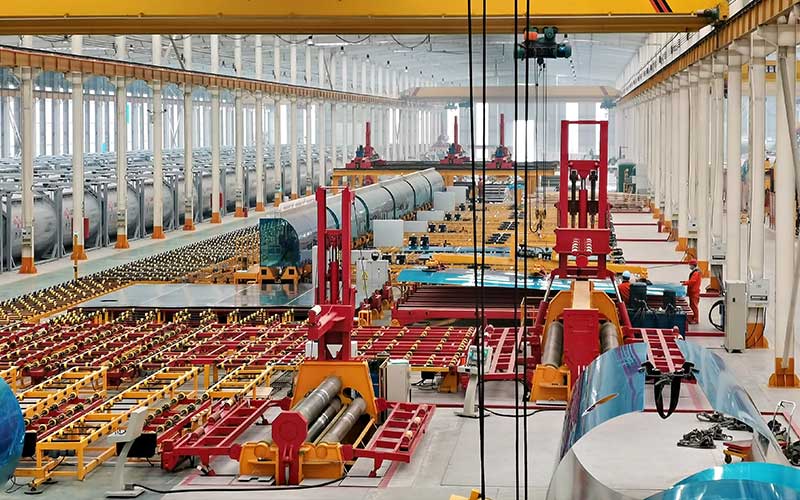
Autonomous guided vehicles support smart manufacturing by connecting material flow with production flow. Instead of treating transport as a separate manual task, AGVs make logistics part of the automated production system.
When AGVs are integrated with production scheduling, managers can better understand where materials are, which workstation is waiting, and how long each transfer takes. This helps identify bottlenecks that are difficult to see in manual workflows.
AGVs also improve process discipline. Materials move along defined routes, workstations receive parts in a planned sequence, and production teams can reduce unnecessary waiting. Over time, this creates a more stable and measurable production environment.
For manufacturers upgrading from standalone equipment to intelligent production lines, AGVs can become the link between machines, workstations, and logistics. They do not replace welding robots or production equipment. They help those systems work together more smoothly.
Conclusion
An autonomous guided vehicle is more than a transport tool. It is a key part of intelligent manufacturing because it helps factories manage material movement with better consistency, safety, and workflow control.
A successful AGV project depends on route planning, load analysis, navigation method, safety design, battery strategy, workstation docking, and system integration. When these factors are matched correctly, AGVs can reduce internal logistics bottlenecks and support smoother production flow.
For factories using robotic welding, automatic welding equipment, cutting systems, or intelligent production lines, an autonomous guided vehicle can help connect separate production steps into a more coordinated manufacturing system.
FAQ
What is an autonomous guided vehicle?
An autonomous guided vehicle is an automated transport vehicle used to move materials inside factories or warehouses. It follows planned routes through navigation systems and helps improve material flow, reduce manual transport, and support more stable production.
How does an autonomous guided vehicle work?
An autonomous guided vehicle works through a combination of navigation sensors, control software, drive systems, safety devices, and route planning. It receives transport tasks, moves along defined paths, avoids obstacles, and delivers materials to target locations.
What is an AGV used for in manufacturing?
In manufacturing, an AGV is used to move raw materials, fixtures, semi-finished parts, finished products, pallets, or tools between production areas. It is especially useful for repeated transport tasks and production lines that need stable material flow.
How does an autonomous guided vehicle improve production flow?
An autonomous guided vehicle improves production flow by reducing waiting time, standardizing material movement, and connecting different workstations. When transport tasks are planned clearly, production teams can manage workflow with better consistency.
What should be considered when selecting an AGV system?
An AGV system should be evaluated based on load size, route layout, navigation method, safety requirements, charging strategy, docking accuracy, and integration with production equipment. The best system should match the real workflow of the factory.