
جدول المحتويات
مقدمة
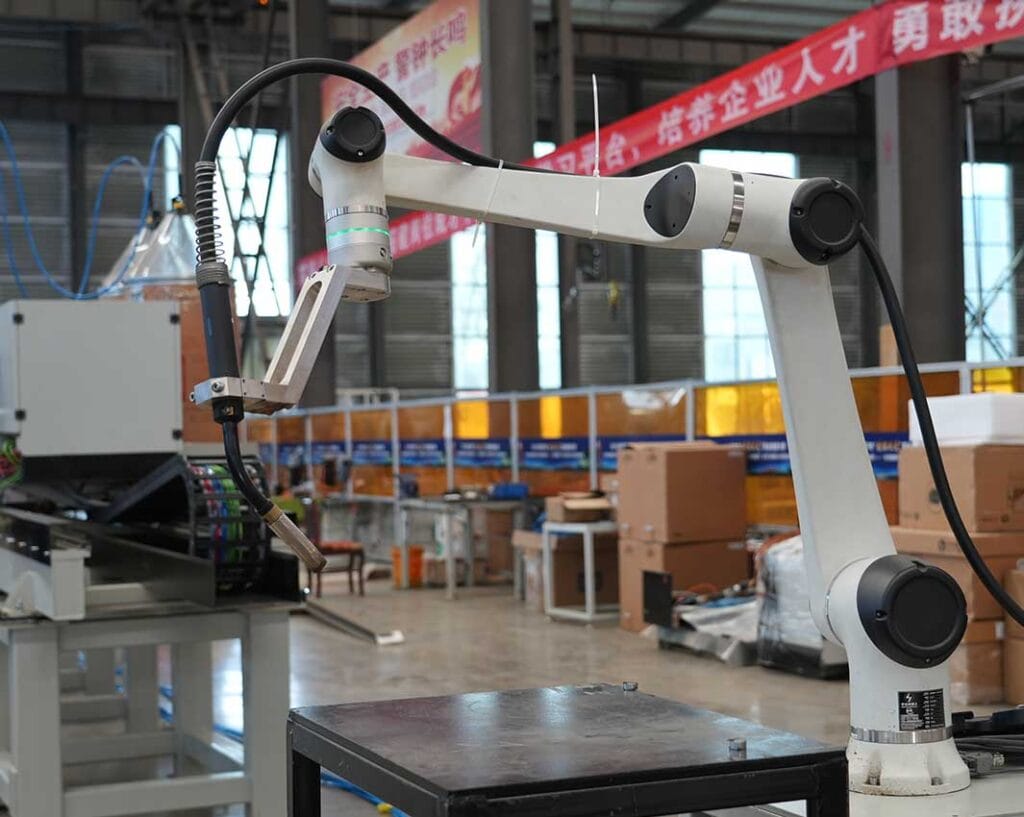
Robotic welding services are becoming an important part of modern industrial manufacturing because they help make welding more consistent, repeatable, and easier to manage. For many factories, welding is not only a production step. It directly affects structural strength, product appearance, delivery stability, and long-term quality control.
Manual welding still has strong value, especially for flexible repair work, prototypes, and irregular parts. However, when the same parts need to be produced repeatedly, quality variation can become a real challenge. Different operators may use different torch angles, travel speeds, and welding habits. Even skilled workers can be affected by fatigue or part inconsistency.
That is where robotic welding services provide value. A professional service is not just about placing a robot beside a workpiece. It includes process analysis, fixture planning, welding parameter setup, programming, testing, safety design, and production workflow optimization. When these parts are planned correctly, robotic welding can help manufacturers build a more stable and measurable welding process.
What Are Robotic Welding Services?
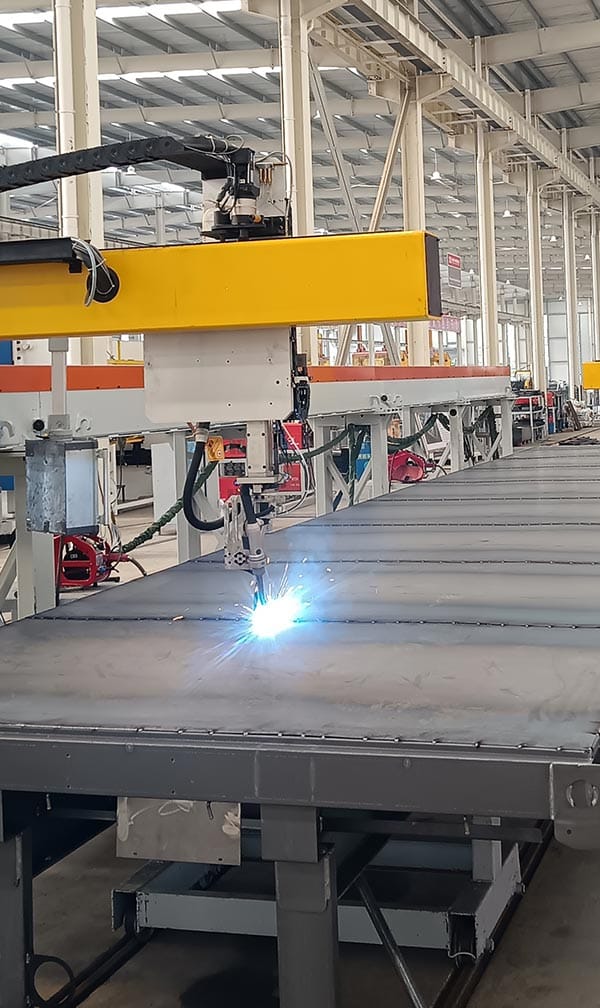
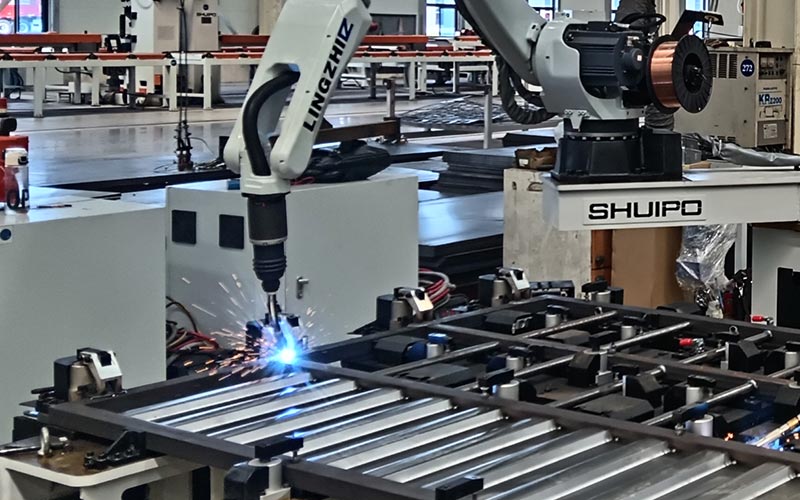
Robotic welding services refer to the use of automated welding systems, robot arms, fixtures, software, and process engineering to complete welding tasks in a controlled and repeatable way. These services may involve designing a complete robotic welding workstation, integrating welding automation into an existing production line, or supporting a specific welded product with a customized automation solution.
The basic concept comes from لحام الروبوت, where mechanized programmable equipment is used to automate welding operations. In real manufacturing projects, the service scope is usually broader than the robot itself.
A complete robotic welding service may include workpiece evaluation, welding process selection, torch path planning, fixture design, robot programming, sample welding, inspection method planning, operator training, and after-service technical support. The goal is to make the welding result stable enough for daily production, not only successful during a single test.
Why Manufacturers Use Robotic Welding Services
Manufacturers usually consider robotic welding services when welding quality becomes difficult to control through manual operation alone. Common problems include unstable weld appearance, inconsistent penetration, high rework rate, slow production rhythm, and heavy dependence on experienced welders.
Robotic welding services help reduce these problems by standardizing the welding process. Once the workpiece position, welding path, torch angle, travel speed, and process parameters are confirmed, the robot can repeat the same operation more consistently than manual welding.
Another reason is workflow control. In manual welding, output can change from shift to shift. With robotic welding, production can be planned around defined cycle times, stable fixture loading, and repeatable welding programs. This helps factories manage schedules, quality inspection, and production capacity more clearly.
For manufacturers producing welded frames, steel structures, equipment bases, cabinets, containers, machinery components, or industrial assemblies, robotic welding services can become a practical step toward better production stability.
Main Types of Robotic Welding Services
Different robotic welding services are designed for different product structures and manufacturing goals. The right solution depends on material type, weld length, seam position, production volume, and flexibility requirements.
| Robotic Welding Service Type | التطبيقات المناسبة | Main Value | Important Evaluation Point |
|---|---|---|---|
| Arc robotic welding services | Frames, steel structures, machinery parts, industrial components | Strong adaptability for many welded assemblies | Fixture accuracy and seam consistency |
| Laser robotic welding services | Sheet metal, cabinets, precision metal parts | مظهر لحام نظيف ومدخلات حرارية مركزة | Safety design and positioning accuracy |
| Collaborative robotic welding services | إنتاج مرن وتغيير قطع العمل | Easier operation and compact layout | Programming method and workflow control |
| Vision-guided robotic welding services | Complex seams and variable part positions | Better seam recognition and path correction | Vision calibration and part tolerance |
| Robotic welding workstation integration | Repeatable batch production and line automation | More stable workflow and production planning | System compatibility and operator training |
The key is not choosing the most complex service. The key is choosing a welding automation approach that matches the real workpiece and production rhythm.
Common Applications of Robotic Welding Services
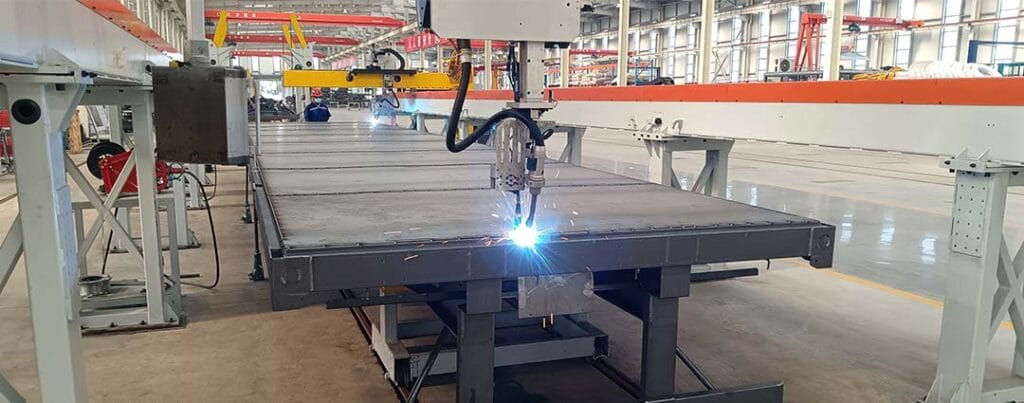
Robotic welding services are widely used in industrial manufacturing where repeated weld seams, stable structures, and consistent quality are required. Common applications include machinery frames, steel structure components, sheet metal enclosures, equipment cabinets, storage containers, industrial bases, vehicle-related components, agricultural machinery parts, construction machinery parts, and customized welded assemblies.
For many factories, robotic welding services begin with one product family that has stable demand and repeatable weld seams. After the process becomes mature, the service can expand to more product types or more production stations.
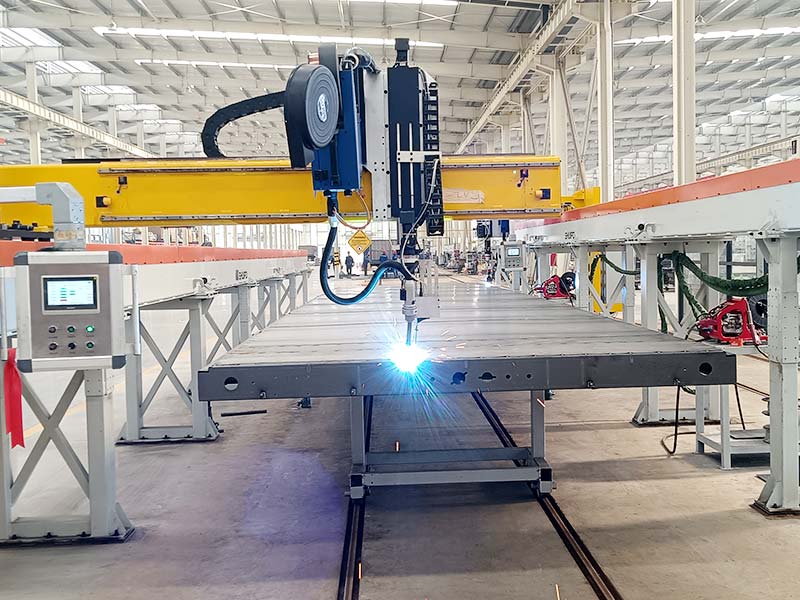
In larger projects, robotic welding services may be connected with منتجات أتمتة اللحام, including robotic welding workstations, automatic welding equipment, intelligent production lines, and supporting automation systems. This helps welding become part of a complete manufacturing workflow rather than an isolated operation.
Robotic Welding Services vs Manual Welding
Robotic welding services and manual welding should not be seen as simple opposites. Both have value, but they serve different production needs.
Manual welding is flexible. It is useful for repair tasks, prototypes, irregular parts, and situations where a skilled person must make quick decisions based on real-time changes. Human judgment is still important when workpiece variation is high or the welding path changes frequently.
Robotic welding services are strongest when the process can be standardized. If the fixture is accurate, the seam is accessible, and the welding program is well tested, robotic welding can repeat the same process with stable movement and controlled parameters.
The biggest difference is process control. Manual welding depends heavily on individual experience. Robotic welding services turn that experience into a structured system, including defined parameters, programmed paths, fixture standards, and inspection routines.
In a well-designed production environment, skilled workers do not lose importance. Their role shifts toward process setup, weld evaluation, fixture improvement, parameter adjustment, and quality management.
Key Factors That Affect Robotic Welding Service Quality
The quality of robotic welding services depends on several practical factors. The first is workpiece consistency. If each part has a different gap, different seam position, or unstable assembly accuracy, the robot may not follow the real seam correctly. In that case, the project may need improved upstream processing, better fixtures, or vision guidance.
Fixture accuracy is another major factor. A fixture must hold the workpiece firmly and position it repeatably. It should also allow good torch access and practical loading and unloading. Poor fixture design can make even a high-end robot perform poorly.
Welding process selection also matters. Arc welding, laser welding, and spot welding have different requirements for heat input, shielding gas, joint design, and weld appearance. The process should be selected according to the part, not just according to general preference.
Robot reach and welding access must be checked carefully. The robot should reach every seam at a suitable angle without collision, cable interference, or limited movement. Large or complex parts may need a positioner or external axis.
Programming method affects daily operation. Stable products may work well with traditional robot teaching. Frequently changing products may need easier programming, offline programming, drag teaching, or vision-assisted path generation.
Quality inspection should also be planned from the beginning. Visual inspection, weld size checks, penetration evaluation, sample testing, and process records help confirm whether the service is suitable for real production.
How Robotic Welding Services Fit Different Production Workflows
A good robotic welding service should adapt to the manufacturer’s workflow instead of forcing the factory to rebuild everything around the robot.
For repeatable parts, a fixed robotic welding cell can provide stable cycle time and strong repeatability. This type of solution works well when the same product structure is produced continuously.
For changing workpieces, a more flexible workstation may be better. Adjustable fixtures, easier programming, and collaborative robot operation can help reduce setup pressure when products vary.
A محطة عمل الروبوت التعاونية can be suitable for manufacturers that need flexible welding automation, compact workstation layout, and adaptable welding paths for different industrial parts. This type of workstation helps balance automation with practical operation in daily production.
The best workflow is one where operators can load parts easily, programs can be selected clearly, inspection points are simple to follow, and the welding result remains stable from batch to batch.
What a Complete Robotic Welding Service Should Include
A complete robotic welding service should include both equipment and engineering support. The robot arm is only one part of the whole solution.
A typical service may include workpiece analysis, welding process planning, fixture design, robot programming, sample welding, process parameter adjustment, safety layout design, operator training, and production support. For more advanced projects, the service may also include seam tracking, vision recognition, offline programming, production data collection, and multi-station coordination.
The service provider should understand welding technology, automation integration, mechanical design, electrical control, software workflow, and on-site commissioning. If these areas are not coordinated, the system may work in theory but fail in daily production.
A strong robotic welding service should make the welding process easier to repeat, easier to inspect, and easier to improve over time.
Common Challenges in Robotic Welding Service Projects
One common challenge is unstable part accuracy. If cutting, bending, machining, or assembly varies too much, robotic welding may produce inconsistent results. The solution may involve fixture improvement, tighter upstream process control, or seam tracking technology.
Another challenge is limited welding access. Some parts may look suitable for automation, but the torch cannot reach the seam at a proper angle. This should be checked during the early evaluation stage.
Programming complexity can also affect production. If operators find the system difficult to adjust, the workstation may not be used effectively. A practical interface and clear operating logic are important for long-term success.
Safety planning is another critical point. Robotic welding involves heat, light, fumes, moving equipment, and electrical systems. The service should include suitable guarding, emergency stops, access control, ventilation planning, and operator safety procedures.
The final challenge is process validation. Sample welding and trial runs help confirm weld quality, cycle rhythm, fixture reliability, and operator workflow before the solution is used in full production.
How Robotic Welding Services Support Smart Manufacturing
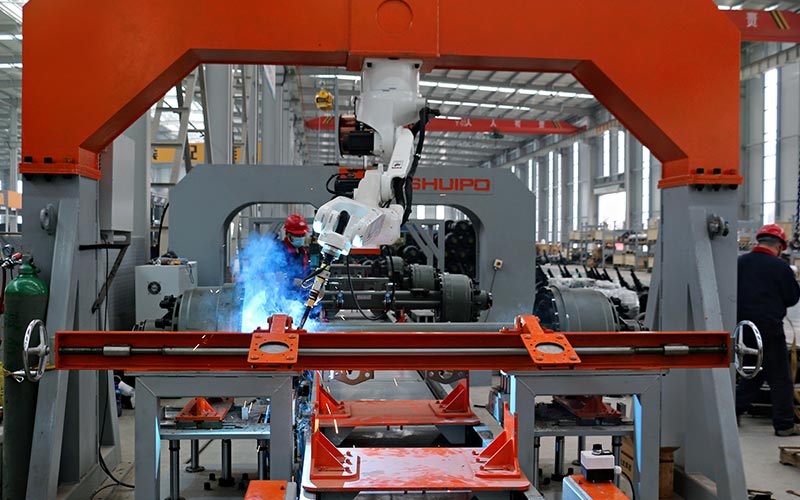
Robotic welding services support smart manufacturing by turning welding into a more measurable and repeatable process. Instead of relying only on manual experience, manufacturers can manage welding through defined programs, stable fixtures, process parameters, and quality records.
When production data is available, engineers can analyze cycle time, fault records, weld consistency, fixture performance, and operator workflow. This makes it easier to find process bottlenecks and improve production step by step.
Robotic welding services also support better training. Operators can follow standardized procedures instead of learning everything through experience alone. Engineers can optimize the process based on data and weld results.
The long-term value is not only automation. It is a more disciplined way to manage welding quality, production planning, and continuous improvement.
خاتمة
Robotic welding services help manufacturers improve weld consistency, production stability, and process control. A successful project is not only about the robot arm. It depends on workpiece analysis, fixture accuracy, welding process selection, programming method, safety planning, and quality inspection.
For manufacturers with repeated weld seams, stable product structures, and clear quality requirements, robotic welding services can turn welding from a variable manual process into a repeatable production system.
The most effective service is one that fits the real workflow of the factory, supports operators in daily use, and creates welding results that can be measured, repeated, and improved.
الأسئلة الشائعة
What are robotic welding services?
Robotic welding services use automated welding systems, robot arms, fixtures, programming, and process engineering to complete welding tasks with repeatable movement and controlled parameters. They help manufacturers improve weld consistency, workflow stability, and quality management.
What industries use robotic welding services?
Robotic welding services are used in metal fabrication, machinery manufacturing, steel structures, equipment frames, cabinets, industrial enclosures, storage containers, vehicle-related components, and other welded assemblies that require stable quality and repeatable production.
Are robotic welding services suitable for flexible production?
Yes, robotic welding services can support flexible production when the system uses adjustable fixtures, practical programming, collaborative robot workstations, or vision-assisted functions. The solution should match the workpiece variety and production workflow.
Why is fixture design important in robotic welding services?
Fixture design controls workpiece position and seam consistency. If the fixture is unstable, the robot may follow the programmed path correctly but still miss the real seam. A strong fixture improves repeatability, welding access, and final weld quality.
How do robotic welding services improve quality control?
Robotic welding services improve quality control by standardizing torch movement, welding speed, parameters, and inspection routines. When parts and fixtures are consistent, the welding result becomes easier to repeat, check, record, and improve over time.