
สารบัญ
บทนํา
Robotic welding has become a practical solution for manufacturers that need stable weld quality, repeatable production, and better control over welding processes. As products become more customized and delivery schedules become tighter, many factories are looking for ways to reduce manual variation while keeping welding quality consistent.
But robotic welding is not simply about replacing manual operation with a robot arm. A successful robotic welding system depends on the welding process, robot motion, fixture design, workpiece accuracy, programming method, safety layout, and operator training. When these parts are matched correctly, robotic welding can help manufacturers improve efficiency, reduce rework, and build a more predictable production workflow.
This guide explains robotic welding from a manufacturing perspective. It focuses on how the system works, where it is suitable, and what factors should be evaluated before applying it to real production.
การเชื่อมด้วยหุ่นยนต์คืออะไร?
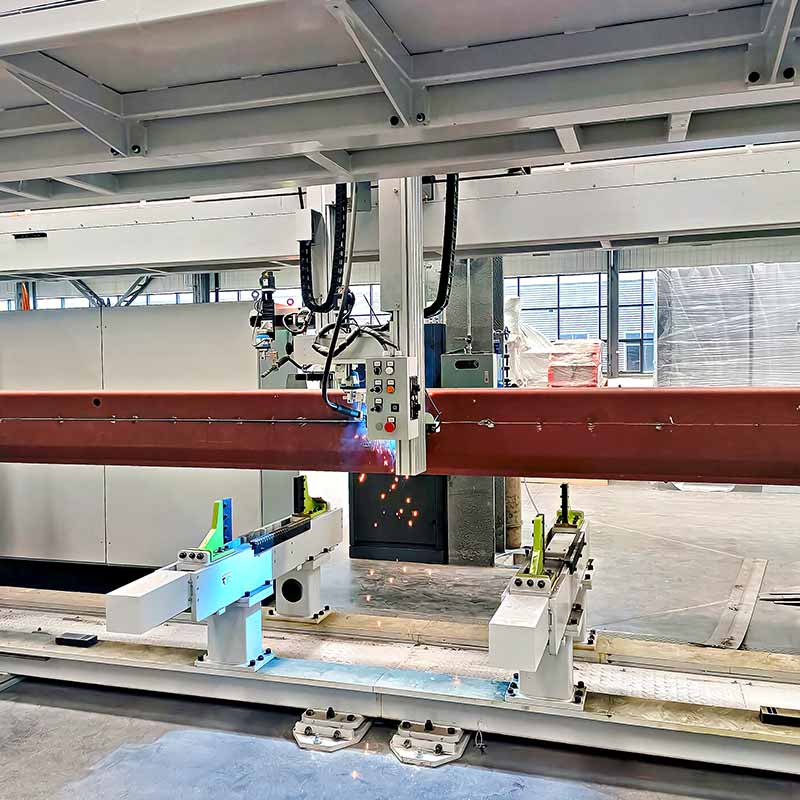
Robotic welding is an automated welding process where a robot controls the welding path, torch position, travel speed, and movement sequence. The welding power source provides the welding energy, while the robot delivers repeatable motion along the required weld seam.
In industrial use, robot welding usually refers to programmable welding automation that combines robot movement with welding equipment. Depending on the application, the system may use arc welding, spot welding, laser welding, or other welding processes.
A rautomated welding system usually includes a robot arm, controller, welding power source, welding torch, wire feeder, fixture, safety system, and software interface. More advanced systems may also include seam tracking, 3D vision, positioners, offline programming, and production data monitoring.
The main value of robotic welding is process consistency. Once the welding path and parameters are correctly set, the robot can repeat the same operation with stable movement and reduced human variation.
เหตุใดการเชื่อมด้วยหุ่นยนต์จึงมีความสําคัญในการผลิตภาคอุตสาหกรรม
Manufacturers often consider automated welding when manual welding becomes difficult to manage at scale. Common challenges include inconsistent weld appearance, unstable output, high dependence on skilled operators, long production cycles, and quality variation between shifts.
Robotic welding helps standardize the process. The robot follows the same path, keeps a controlled torch angle, and repeats the same welding sequence. This makes production easier to manage, especially for parts that have repeated structures or similar weld seams.
It also changes the role of welding workers. Instead of relying only on direct manual operation, skilled workers can focus on process planning, fixture adjustment, weld inspection, parameter optimization, and equipment maintenance. In this way, robotic welding does not remove welding expertise; it makes that expertise part of a more controlled production system.
For manufacturers that produce metal frames, steel structures, machinery components, cabinets, containers, vehicle parts, or industrial assemblies, robotic welding can help create a stronger foundation for stable production.
Main Types of Robotic Welding Systems
Different automated welding systems are used for different workpieces and production goals. Selecting the right type depends on material, joint design, weld length, part size, production rhythm, and quality requirements.
| Robotic Welding Type | Suitable Applications | Main Advantages | Key Considerations |
|---|---|---|---|
| Arc robotic welding | Frames, structural parts, machinery components | Strong adaptability and wide industrial use | Requires stable fixtures and good seam consistency |
| Spot robotic welding | Sheet metal overlapping joints | Fast cycle time and repeatable weld points | Mainly suitable for specific joint structures |
| Laser robotic welding | Precision parts, cabinets, thin metal components | Clean weld appearance and focused heat input | Requires strong safety protection and accurate positioning |
| Collaborative robotic welding | Flexible production and changing workpieces | Easier operation and smaller workstation layout | Best for suitable part size and controlled workflow |
| Vision-guided robotic welding | Complex seams and variable parts | Better adaptability to seam position changes | Requires stronger integration and process testing |
The right system is not defined by the robot alone. A strong automated welding result depends on how the robot, welding equipment, fixture, software, and workpiece design work together.
Common Applications of Robotic Welding
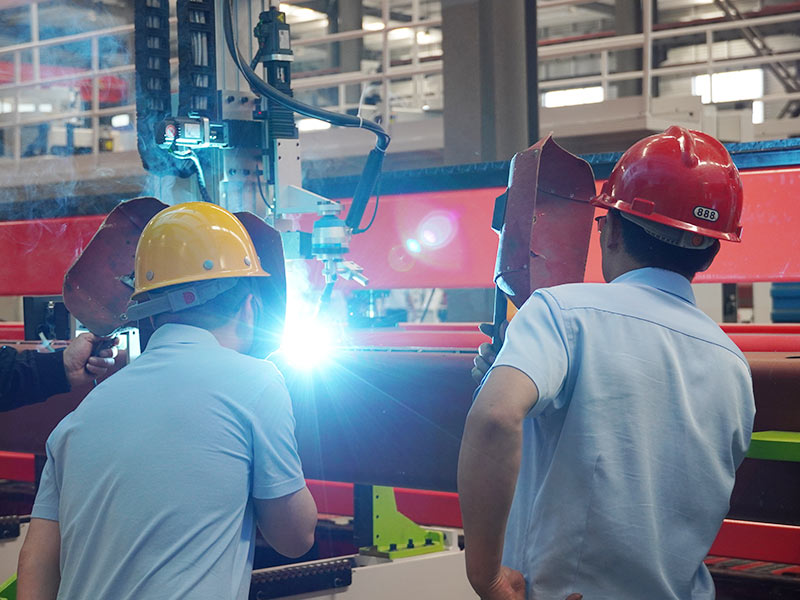
Robotic welding is widely used in industrial manufacturing where repeated welding tasks need consistent quality and stable output. It is especially useful for parts with clear weld paths, repeatable structures, and manageable tolerances.
Common applications include machinery frames, steel structure components, sheet metal cabinets, industrial enclosures, equipment bases, vehicle components, storage containers, agricultural machinery parts, construction machinery parts, and customized metal assemblies.
For larger production planning, robotic welding may be integrated with ผลิตภัณฑ์ระบบอัตโนมัติในการเชื่อม, including robotic welding workstations, automatic welding equipment, and intelligent production line systems. This allows welding to become part of a broader manufacturing workflow instead of a single isolated process.
In many factories, automated welding is first applied to parts with long seams, repetitive welds, or stable batch production. After the process becomes mature, it can gradually expand to more complex workpieces.
Robotic Welding vs Manual Welding
Manual welding and automated welding each have their own value. Manual welding is flexible and useful for repair work, trial production, irregular parts, and situations where a skilled operator needs to make real-time adjustments.
Robotic welding is stronger when the process can be standardized. If the workpiece dimensions are stable, the fixture is accurate, and the weld path is clear, a robot can repeat the same welding process with higher consistency.
The real difference is not simply human versus machine. It is flexible judgment versus repeatable process control. Manual welding depends on operator experience. Robotic welding depends on preparation, programming, fixture accuracy, and parameter stability.
In a well-managed factory, the two methods can support each other. Manual welding can handle complex changes and special cases, while robotic welding can take over repeated production tasks that require consistency.
Key Factors That Affect Robotic Welding Performance
Robotic welding performance depends on several practical factors. The first is workpiece consistency. A robot follows a programmed path, so the part must be positioned accurately. If the seam location changes from one part to another, weld quality may become unstable.
The second factor is welding process type. Arc welding, laser welding, and spot welding have different requirements for heat input, joint preparation, torch access, shielding gas, and parameter control.
Fixture accuracy is another major factor. A fixture must hold the part firmly, reduce deformation, allow welding access, and support efficient loading and unloading. A weak fixture can make even a high-quality robot perform poorly.
Robot reach and movement should also be evaluated. The robot must reach all weld seams at suitable angles without interference. For large or complex parts, positioners or external axes may be needed.
Programming method affects daily operation. Stable products may use traditional programming, while frequently changing products may benefit from simpler teaching methods, offline programming, or vision-assisted path planning.
Safety design is also essential. Robotic welding involves heat, arc light, moving equipment, fumes, and electrical systems. A complete workstation should include suitable protection, emergency stops, access control, and clear operating procedures.
How to Match Robotic Welding with Your Workpieces
The workpiece should always guide the automated welding solution. Before choosing a system layout, manufacturers should review the material, thickness, joint type, seam length, part size, tolerance range, surface condition, and required weld appearance.
For simple repeated parts, a standard robotic welding cell may be enough. For parts with different angles, multiple welding positions, or frequent product changes, a flexible workstation may be more suitable.
A เวิร์กสเตชันหุ่นยนต์ทํางานร่วมกัน can support flexible welding automation for industrial parts that require easier operation, compact layout, and adaptable welding paths. This type of workstation can be useful when production does not rely on only one fixed product structure.
The best match is the system that makes the welding process stable, not necessarily the most complex configuration. If the fixture is reliable, the seam is accessible, and the programming workflow is practical, robotic welding can deliver strong production value.
What a Complete Robotic Welding System Should Include
A complete robotic welding system should be designed as an integrated workstation. The robot arm is only one part of the whole solution.
A typical system may include the robot body, robot controller, welding power source, welding torch, wire feeder, torch cleaning unit, fixture, positioner, safety fence or enclosure, electrical control cabinet, software interface, and operator station.
For more advanced production, the system may include seam tracking, 3D vision, offline programming, production data collection, automatic loading support, and multi-station coordination.
The most important point is system compatibility. The robot must match the welding process. The fixture must match the workpiece. The software must match the operator’s workflow. The safety design must match the production environment. If one part is poorly matched, the whole system may fail to deliver stable results.
Common Problems in Robotic Welding Projects
One common problem is poor workpiece preparation. If cutting, bending, machining, or assembly accuracy is unstable, the robot may not follow the actual seam correctly. This can lead to missed seams, uneven welds, or excessive rework.
Another problem is fixture weakness. Robotic welding needs repeatable positioning. If the fixture allows movement, gaps, or deformation, weld consistency will suffer.
A third problem is overly complex programming. If operators find the system difficult to adjust, production may slow down during product changeovers. A practical programming workflow is especially important for manufacturers with multiple product types.
Some projects also ignore process testing. Trial welding is valuable because it helps confirm weld appearance, penetration, cycle rhythm, torch access, fixture reliability, and operator workflow before the system is fully used in production.
How Robotic Welding Supports Smart Manufacturing
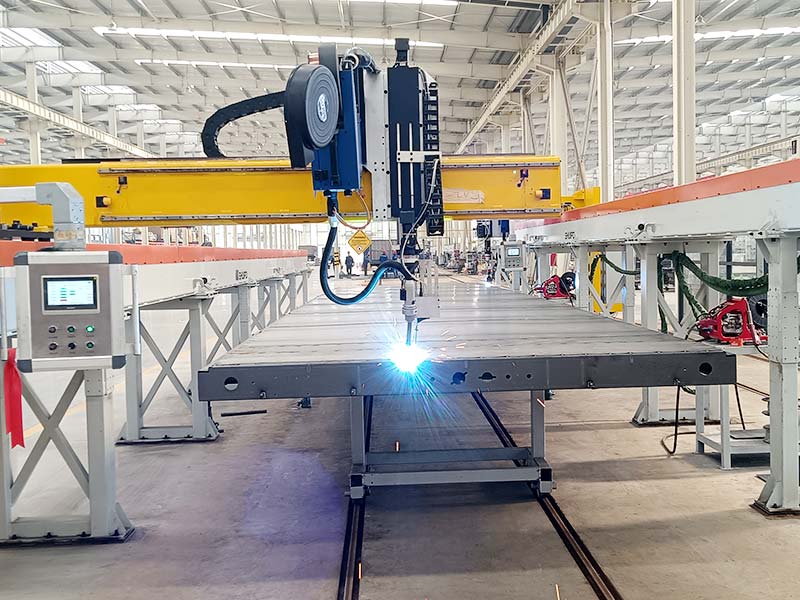
Robotic welding supports smart manufacturing by turning welding into a more measurable and repeatable process. Instead of relying only on manual experience, the factory can manage welding through controlled parameters, standard fixtures, repeatable motion, and quality records.
When production data is collected, manufacturers can review cycle times, fault records, welding parameters, and quality trends. This makes it easier to identify bottlenecks and improve the process over time.
Robotic welding also supports better production planning. Once the process is stable, managers can estimate output more accurately, organize shifts more clearly, and reduce uncertainty caused by inconsistent manual operation.
The long-term value of robotic welding is not only faster welding. It is a more structured way to control quality, train operators, improve workflow, and build scalable manufacturing capacity.
บทสรุป
Robotic welding is an important solution for manufacturers that want better weld consistency, repeatable production, and stronger process control. It is especially useful for industrial parts with repeated weld seams, stable structures, and clear quality requirements.
A successful robotic welding project starts with the workpiece. Material, joint design, seam access, fixture accuracy, programming method, and safety layout all affect the final result. When these factors are properly evaluated, robotic welding can help manufacturers build a more stable, efficient, and intelligent welding process.
For modern industrial manufacturing, robotic welding is not just automation equipment. It is a practical step toward more reliable production quality and smarter factory management.
คําถามที่พบบ่อย
What is robotic welding?
Robotic welding is an automated welding process where a robot controls the welding torch, path, movement speed, and welding sequence. It helps improve repeatability, reduce manual variation, and make weld quality easier to manage in industrial production.
What types of welding can be used in robotic welding?
Robotic welding can use different processes, including arc welding, spot welding, and laser welding. The right process depends on the material, part structure, joint design, weld appearance requirements, and production workflow.
Is robotic welding suitable for small-batch production?
Robotic welding can be suitable for small-batch production when the system is designed for flexibility. Adjustable fixtures, easier programming, collaborative robots, and vision-assisted functions can help reduce setup pressure for changing parts.
Why is fixture design important in robotic welding?
Fixture design affects how accurately each part is positioned. If the fixture is unstable, the robot may follow the programmed path correctly but still miss the real seam. A strong fixture helps improve weld consistency and repeatability.
How does robotic welding improve production quality?
Robotic welding improves production quality by controlling movement, torch angle, welding speed, and process parameters more consistently. When the workpiece and fixture are stable, the welding result becomes easier to repeat, inspect, and improve.