
جدول المحتويات
مقدمة
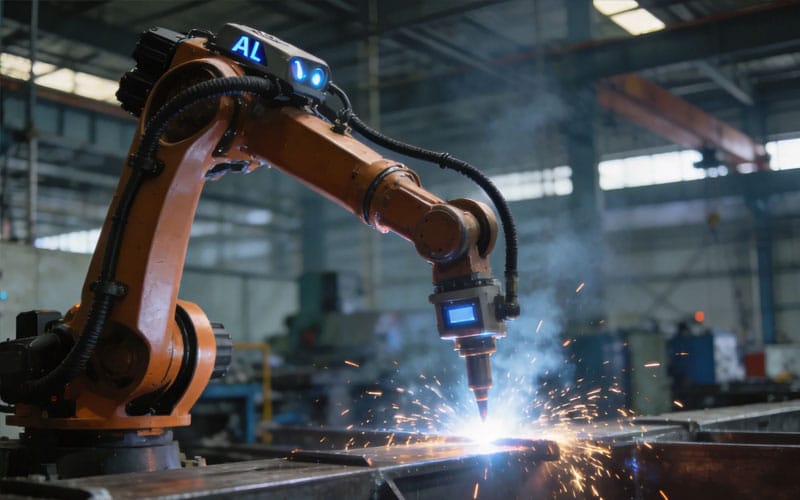
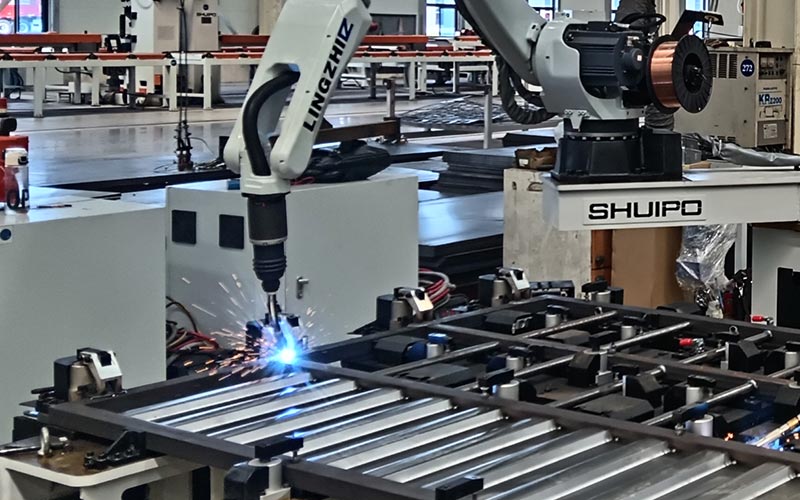
A laser welding robot is an automated welding system that uses a robot arm or robotic workstation to guide a laser welding head along a programmed path. The heat source comes from laser beam welding, a process that uses a concentrated laser beam to join materials with focused energy.
Unlike a simple welding machine, a laser welding robot combines a robotic motion system, laser source, welding head, control software, fixture, safety enclosure, and sometimes vision or seam tracking technology. The robot controls the path. The laser controls the heat input. The complete system determines whether the weld is stable, clean, and repeatable.
For industrial manufacturing, the key is not choosing the most complex system. The key is choosing a system that matches your materials, workpiece structure, seam design, production rhythm, and operator capability.
ما هو روبوت اللحام بالليزر؟
A laser welding robot is an automated welding system that uses a robot arm or robotic workstation to guide a laser welding head along a programmed path. The heat source comes from laser beam welding, a process that uses a concentrated laser beam to join materials with focused energy.
In a robotic setup, the laser welding head moves according to the programmed welding path. The system controls welding speed, laser power, focal position, shielding gas, and sometimes wire feeding or seam correction. When the system is properly configured, it can create consistent welds with a narrow heat-affected area and a clean weld appearance.
You can think of the laser as the energy tool and the robot as the precision movement platform. Good results depend on how well these two parts work together.
لماذا يتم استخدام روبوتات اللحام بالليزر في التصنيع الحديث
Manufacturers choose a laser welding robot when they need more than basic weld completion. They usually need process stability, better appearance, less deformation, faster production flow, and easier quality control.
Laser welding is especially valuable for parts where appearance and precision matter. Sheet metal cabinets, stainless steel structures, enclosures, machinery covers, frames, boxes, and precision assemblies often benefit from the focused heat input of laser welding. Compared with many traditional welding methods, laser welding can reduce excess thermal influence when the material, joint, and parameters are suitable.
A robotic system also improves repeatability. Manual welding depends heavily on operator skill, hand stability, and working condition. A laser welding robot follows the same path and parameter logic again and again, which helps manufacturers reduce process variation in batch production.
التطبيقات الرئيسية لروبوتات اللحام بالليزر
A laser welding robot can be used in many industrial welding environments, but it performs best when the part structure is suitable for repeatable positioning and controlled welding paths.
Common applications include sheet metal parts, precision metal housings, equipment frames, stainless steel assemblies, machinery components, structural parts, electrical cabinets, metal boxes, and customized industrial components. For these parts, manufacturers often care about clean seams, limited distortion, stable appearance, and reduced finishing work.
In larger automation projects, a laser welding robot may be integrated into a complete حل أتمتة اللحام together with fixtures, positioners, loading systems, conveyors, or intelligent production line equipment. This is useful when the goal is not only welding quality, but also smoother production management.
روبوت اللحام بالليزر مقابل اللحام التقليدي
A laser welding robot is not suitable for every welding task, and traditional welding still has value in many production environments. The right choice depends on the material, joint structure, weld requirement, production volume, and process tolerance.
| عامل المقارنة | Laser Welding Robot | Traditional Manual Welding |
|---|---|---|
| Heat input | More concentrated heat source | Wider heat influence in many cases |
| Weld appearance | Cleaner and narrower on suitable parts | Depends strongly on welder skill |
| Repeatability | High repeatability after setup | Varies by operator and working condition |
| Deformation control | Better on suitable thin or precision parts | More deformation risk on sensitive parts |
| Process stability | Strong when fixtures and parameters are stable | Flexible but less consistent in batches |
| دور المشغل | Focuses on setup, monitoring, and quality control | Focuses on direct welding operation |
| Best fit | Repeatable parts, clean welds, precision production | Repair, complex variation, flexible manual adjustment |
The important point is not to replace every welding process with laser automation. The smarter approach is to identify which parts are suitable for robotic laser welding and which parts still need manual or other welding methods.
العوامل الرئيسية التي يجب تقييمها قبل اختيار روبوت اللحام بالليزر
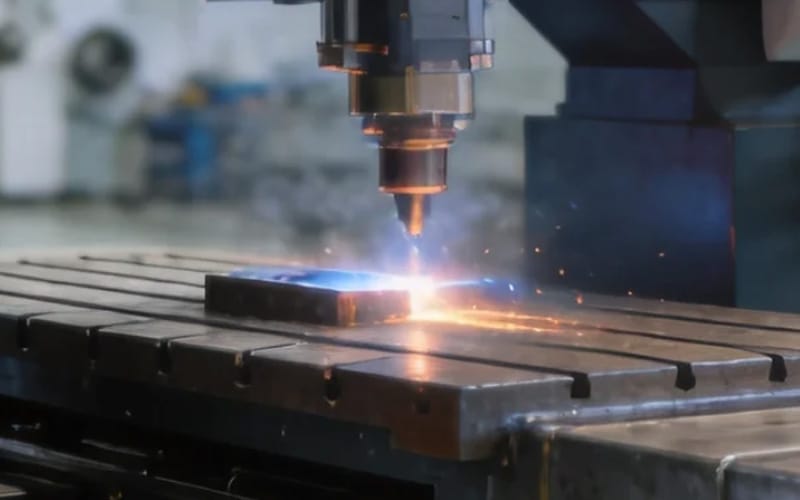
A laser welding robot should be evaluated based on your real production process. The first factor is material type. Stainless steel, carbon steel, aluminum alloys, and coated materials respond differently to laser welding. Each material requires suitable process parameters, shielding gas, and surface preparation.
The second factor is material thickness. Laser welding is often strong in thin and medium-thickness precision welding, but the final process depends on penetration requirements and joint design. If the part requires deep penetration or special joint preparation, the welding process must be tested carefully.
The third factor is seam accessibility. Even if the robot has enough reach, the welding head must still approach the seam at a suitable angle. Poor access can cause unstable welding, weak fusion, or incomplete seam coverage.
The fourth factor is workpiece consistency. A robot follows a programmed path, so parts need stable dimensions and accurate positioning. If the seam location changes too much from part to part, the system may need vision guidance or seam tracking.
The fifth factor is fixture stability. A good fixture holds the part accurately, reduces movement during welding, and allows easy loading and unloading. In robotic laser welding, fixture quality can be just as important as robot quality.
كيفية مطابقة روبوت اللحام بالليزر مع قطع العمل الخاصة بك
The workpiece should always come before the equipment configuration. Start by reviewing the part drawing, seam length, joint type, tolerance range, material condition, and expected weld appearance.
For simple straight seams, a standard robotic path may be enough. For curved seams, complex frames, or irregular assemblies, the system may need multi-axis movement, positioners, or visual positioning. For products that change frequently, a flexible workstation may be more suitable than a fixed high-volume cell.
A محطة عمل الروبوت التعاونية can be useful when manufacturers need flexible welding automation for different workpieces, smaller batches, or complex-angle welding tasks. This type of system can help balance automation efficiency with easier operation and layout flexibility.
The best match is not determined by one parameter. It depends on how the robot, laser source, welding head, fixture, software, and safety system work together around your actual product.
طرق البرمجة والتحكم
Programming is one of the most important parts of robotic laser welding. A system that is difficult to program may slow down production even if the hardware is strong.
Traditional robot programming works well for stable, repeated products. Once the path is created and verified, the robot can repeat it efficiently. However, if products change often, the factory may need easier programming methods such as graphical programming, offline programming, drag teaching, or vision-assisted path generation.
For complex parts, seam recognition can improve adaptability. A vision system can help locate the real seam position before welding. Seam tracking can help correct small deviations during the welding process. These functions are especially useful when workpiece tolerance or assembly consistency is not perfect.
Still, vision should not be added only as a decoration. It should solve a real production problem. If your fixtures and parts are already highly consistent, a simpler control method may be more efficient.
متطلبات السلامة لروبوتات اللحام بالليزر
Laser welding requires serious safety planning. A laser welding robot should include suitable safety protection, controlled access, warning systems, protective enclosure design, and operator training.
Because laser energy is concentrated, the welding area must be protected from unintended exposure. The safety system should match the laser source, workstation layout, and daily operating method. Operators should understand loading procedures, emergency stops, maintenance points, and inspection routines.
Ventilation is also important. Welding fumes, reflected light, and metal vapor must be managed properly. A professional laser welding workstation should be designed as a controlled process area, not just an open robot arm placed near a workbench.
Good safety design protects operators and also improves production discipline. When the workflow is clear, operators can run the system with more confidence and fewer interruptions.
ما الذي يجب أن يتضمنه نظام روبوت اللحام بالليزر الكامل
A complete laser welding robot system is more than the robot and laser source. It usually includes the robot arm or motion platform, laser generator, welding head, control cabinet, cooling system, fixture, safety enclosure, shielding gas system, software interface, and quality inspection process.
For some applications, the system may also include a positioner, rotary table, loading platform, visual positioning system, seam tracking device, or production data monitoring. These options should be selected according to the workpiece and workflow.
The system should be evaluated as a whole. A powerful laser source will not perform well if the fixture is unstable. A precise robot will not solve problems if the seam position changes too much. Good software will not help if operators cannot understand the workflow.
The strongest system is the one where each part supports the final welding goal.
Common Mistakes in Laser Welding Robot Projects
One common mistake is focusing only on the robot model. In reality, weld quality depends on the full system, including laser source, welding head, fixture, control logic, safety design, and process testing.
Another mistake is ignoring part consistency. If upstream cutting, bending, machining, or assembly varies too much, the robot may not follow the real seam correctly. In this case, better fixtures, improved part preparation, or vision guidance may be needed.
A third mistake is underestimating operator training. A laser welding robot still needs people who understand loading, positioning, parameter adjustment, weld inspection, and basic maintenance. A well-trained operator can make the system more stable in daily production.
The last mistake is skipping process validation. Before a system is finalized, sample welding and process review are valuable. They help confirm weld appearance, penetration, cycle rhythm, fixture access, and workstation layout.
How Laser Welding Robots Support Smart Manufacturing
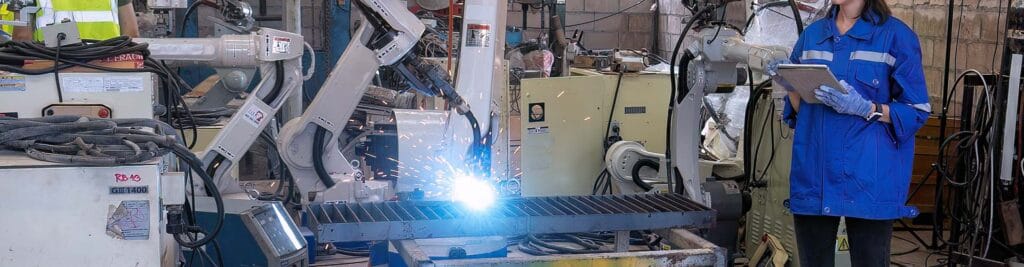
A laser welding robot can support smart manufacturing by making the welding process more measurable and repeatable. Instead of depending only on manual experience, the factory can manage welding through controlled parameters, stable paths, fixture standards, and quality records.
In an advanced workstation, production data can also support process improvement. Operators and engineers can review welding parameters, cycle times, fault records, and quality feedback. This makes it easier to find bottlenecks and improve the workflow over time.
The real value of robotic laser welding is not only speed. It also gives manufacturers a more structured way to manage welding quality. When the process becomes repeatable, the factory can improve training, inspection, scheduling, and production planning.
خاتمة
A laser welding robot can be a strong solution for manufacturers that need clean weld appearance, stable quality, reduced deformation, and repeatable production. However, the right system must be matched with the actual workpiece, material, seam design, fixture accuracy, programming method, and safety requirements.
The most successful robotic laser welding projects usually start with a clear process analysis. When the workpiece is suitable, the fixture is stable, the programming method is practical, and the safety system is complete, a laser welding robot can help turn welding into a more controlled and scalable production process.
For manufacturers moving toward smarter metal fabrication, the goal is not simply automation. The goal is reliable welding quality that can be repeated, measured, and improved.
الأسئلة الشائعة
What is a laser welding robot?
A laser welding robot is an automated system that uses a robot arm or workstation to guide a laser welding head along a controlled path. It combines laser energy with robotic motion to create repeatable welds for suitable metal parts.
What materials can a laser welding robot weld?
A laser welding robot can be used for many metal materials, including stainless steel, carbon steel, aluminum alloys, and precision sheet metal. The final result depends on material thickness, surface condition, joint design, and process parameters.
Is a laser welding robot suitable for small-batch production?
It can be suitable when the system is designed for flexibility. For small-batch or changing products, easier programming, adjustable fixtures, and vision-assisted functions can help reduce setup time and improve production adaptability.
Why is fixture design important for a laser welding robot?
Fixture design controls part position and welding consistency. If the part moves or the seam location changes, weld quality may become unstable. A strong fixture helps the robot follow the correct path with repeatable results.
How does a laser welding robot improve weld quality?
A laser welding robot improves weld quality by controlling movement, speed, laser output, and welding path more consistently than manual operation. When the workpiece and fixture are stable, the process becomes easier to repeat and inspect.