
Table of Contents
Introduction
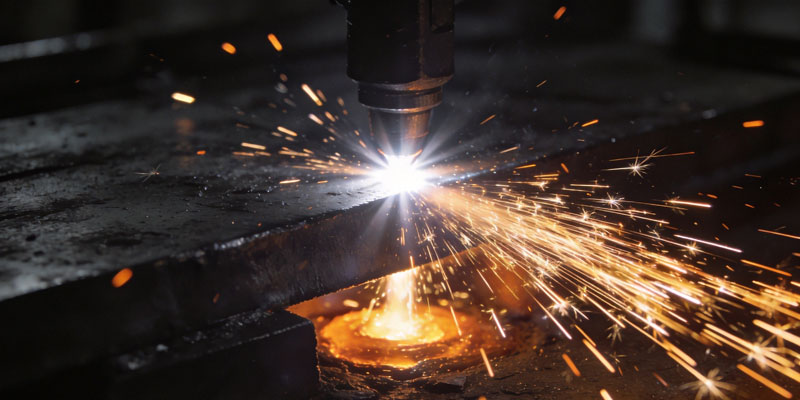
Robotic arc welding is increasingly used in manufacturing environments where weld consistency, repeatable production, and controlled process execution are essential. While an experienced welder can adapt quickly to changing joint conditions, manual welding naturally introduces more variation between operators, shifts, and repeated production cycles.
A robotic system approaches the process differently. Once the welding path, torch orientation, travel speed, joint position, and process parameters have been validated, the robot can reproduce the same sequence repeatedly. This does not mean every weld automatically becomes perfect. The quality of robotic arc welding still depends on part accuracy, fixtures, joint preparation, welding parameters, torch access, and the ability to manage normal workpiece variation.
The real advantage is repeatability. When the surrounding process is controlled, robotic arc welding turns a validated welding procedure into a stable manufacturing sequence that can be executed consistently across large numbers of similar components.
This article explains where that repeatability comes from, what can reduce it, and how manufacturers can design robotic arc welding systems around real production conditions rather than ideal laboratory samples.
What Is Robotic Arc Welding?
Robotic arc welding combines a programmable robot with an arc welding process to automate torch movement and welding execution.
The robot controls where the torch moves, how fast it travels, and how it is oriented relative to the joint. The welding system controls the electrical and process parameters required to create the arc and complete the weld.
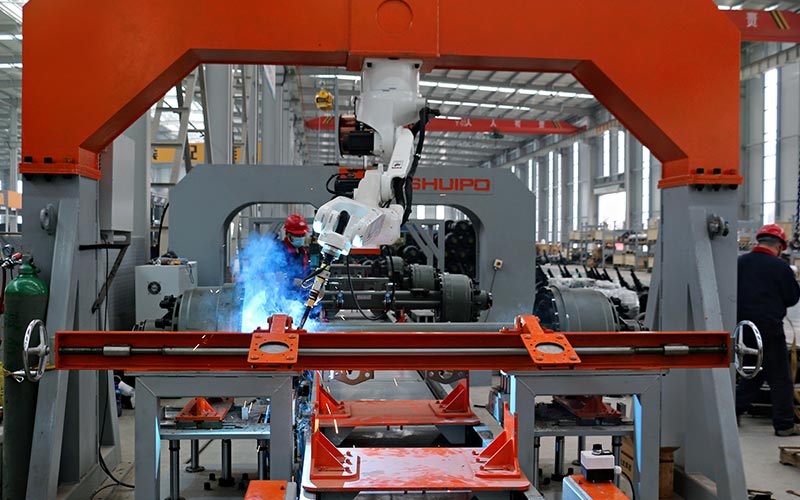
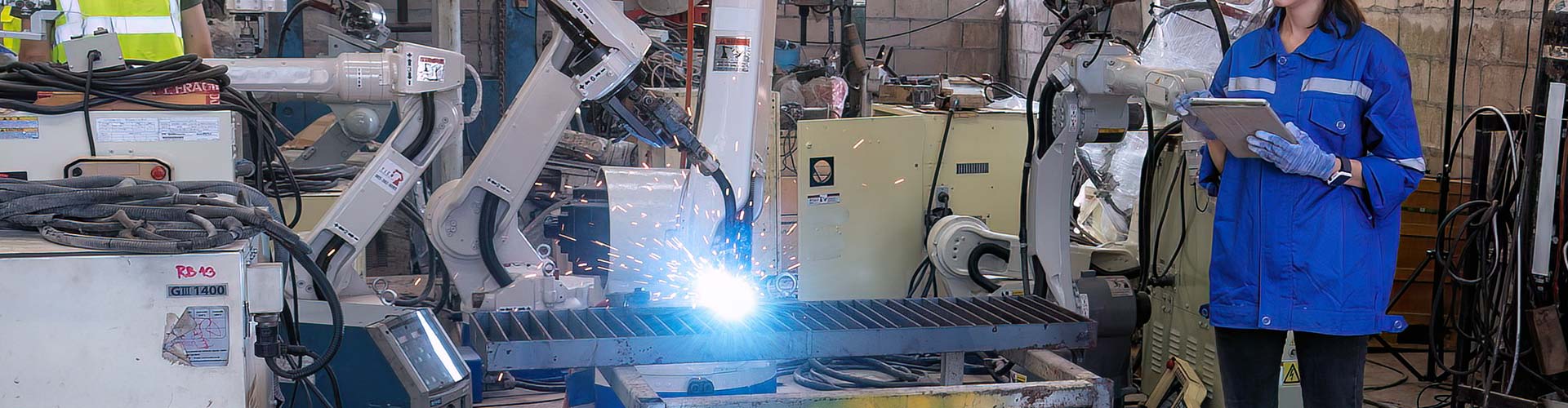
A typical robotic arc welding system can include a robot, welding torch, power source, wire feeder, controller, fixtures, workpiece positioners, safety equipment, and sensing technology.
The robot itself provides motion repeatability, but the complete system determines whether the weld can also be repeated successfully.
If the part shifts, the fixture changes position, or the real seam moves away from the programmed path, the robot can repeat exactly the same motion while producing a different welding result.
This is why robotic arc welding should be viewed as a complete process rather than simply a robot performing a manual task.
Where Repeatability Comes From in Robotic Arc Welding
Repeatability in robotic arc welding is created by several controlled layers working together.
The first layer is robot motion. The robot repeatedly follows the same programmed trajectory with a defined torch angle and travel speed.
The second layer is workpiece location. Fixtures must place the component in a predictable relationship with the robot.
The third layer is the welding process itself. Wire feeding, electrical parameters, shielding conditions, welding sequence, and torch setup all need to remain stable.
The fourth layer is process feedback. In applications where joint position varies, seam sensing or vision can help the robot identify where the real weld joint is located.
When these layers are coordinated, the robotic system can reproduce a welding process much more consistently.
| Repeatability factor | What must remain controlled | Effect on robotic arc welding |
|---|---|---|
| Robot path | Position, speed, and orientation | Keeps torch movement consistent |
| Fixture accuracy | Part location and clamping | Keeps the seam aligned with the programmed path |
| Welding parameters | Process settings and sequence | Supports repeatable arc behavior |
| Wire delivery | Feeding stability | Helps maintain consistent deposition |
| Joint preparation | Gap, alignment, and surface condition | Reduces variation between components |
| Workpiece positioning | Rotation and orientation | Keeps joints accessible |
| Seam sensing | Actual joint location | Allows controlled path correction |
| Process sequence | Weld order and timing | Improves cycle stability |
No single factor can guarantee repeatability alone. Robotic arc welding becomes stable when the entire process is designed to support repeated execution.
Why Consistent Torch Motion Matters
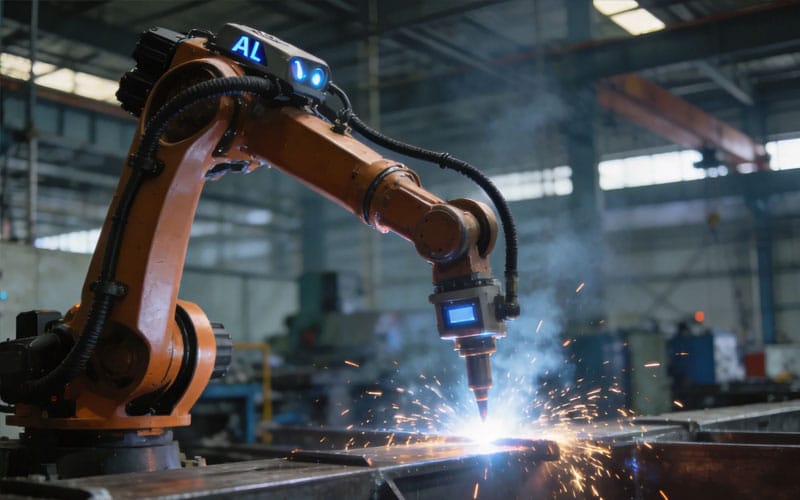
Manual welding depends heavily on the operator’s ability to maintain the correct torch position and movement throughout the weld.
Travel speed may vary slightly. Torch angle may change as the welder adjusts position. Starts, stops, and transitions between joints can also differ between operators.
Robotic arc welding reduces much of this motion variation.
Once the program has been validated, the robot can repeat the same torch path at the same programmed speed and orientation.
This becomes particularly valuable on components containing multiple similar welds.
For example, a fabricated frame may contain several joints with the same geometry. Instead of relying on an operator to reproduce the same movement manually each time, the robot can execute a defined welding path for every joint.
Repeatable motion also makes process improvement easier.
If engineers modify a welding sequence or adjust a path, they can evaluate the change knowing that robot movement will remain consistent during later production.
This creates a more controlled foundation for continuous process optimization.
Fixture Design Is Part of Welding Repeatability
A robot can repeat its movement very accurately, but that accuracy only matters if the workpiece appears in the expected position.
Fixtures therefore play a central role in robotic arc welding.
A fixture must establish a repeatable relationship between the component and the robot coordinate system. If a workpiece moves slightly between cycles, the programmed welding path may no longer match the actual joint.
That mismatch becomes especially important on narrow joints or complex three-dimensional assemblies.
Fixture design should therefore consider more than clamping strength.
The fixture needs to locate the component consistently while maintaining torch access and supporting efficient loading and unloading. It should also consider how the workpiece may react to heat during welding.
A fixture that is too restrictive can sometimes contribute to distortion, while a fixture that provides insufficient control may allow movement during the process.
The strongest fixture designs balance repeatable location, appropriate restraint, accessibility, and production practicality.
How Joint Variation Affects Robotic Arc Welding
Real production parts are rarely identical.
Cutting, forming, machining, assembly, tack welding, and material behavior can all create small dimensional differences.
A manual welder may see those differences and adjust automatically.
A fixed-path robot cannot make that judgment unless the system has a way to identify the variation.
This is one of the most important limitations to understand when implementing robotic arc welding.
If a seam moves away from the programmed path, the robot may continue to follow its original trajectory.
The correct solution depends on the source of the variation.
If the variation can be reduced through improved manufacturing or better fixtures, those improvements should be made upstream.
If the variation is normal and unavoidable but remains within a predictable range, sensing may provide a better solution.
The goal is not to eliminate every difference between workpieces. It is to understand which variations matter to the welding process and decide how they should be controlled.
Seam Tracking and Vision for Better Repeatability
Seam sensing gives robotic arc welding systems information about the actual workpiece rather than relying only on programmed geometry.
Depending on the application, sensing can identify the joint before welding begins or track its location during the process.
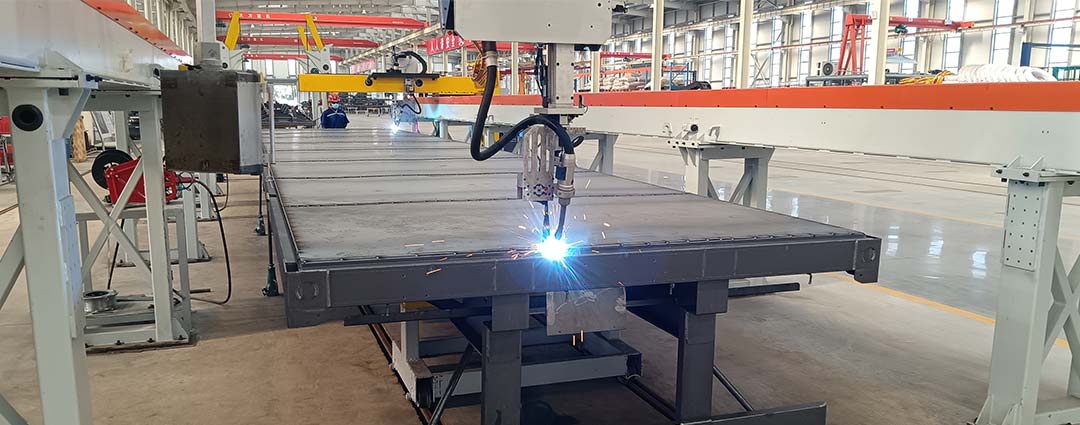
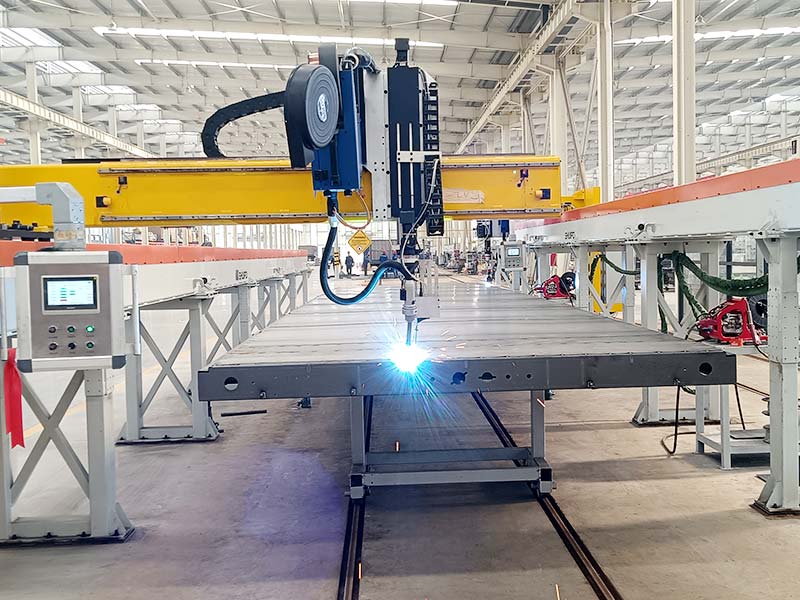
This is especially useful when components are large, fabricated from multiple parts, or subject to dimensional variation.
The robot provides consistent motion, while the sensing system provides information about where that motion should occur.
This combination can improve flexibility without giving up process control.
For applications with variable joint positions, robotic welding systems can combine programmed robot motion with workpiece positioning, seam sensing, and path correction to maintain better alignment with the actual weld.
The important point is that sensors work best when variation is already understood.
They should manage controlled deviations, not compensate for an unstable manufacturing process with no defined limits.
Robotic Arc Welding and Workpiece Positioning
Some joints are difficult to weld in a fixed orientation.
A robot may technically be able to reach the seam, but the torch angle could become unsuitable or the wrist may approach an extreme configuration.
Workpiece positioners help solve this problem.
Instead of forcing the robot to reach every joint from a single location, the positioner rotates or tilts the component into a more favorable orientation.
This can improve access and help the robot maintain smoother motion.
For cylindrical parts, large frames, machinery components, and multi-sided structures, coordinated positioning can be an important part of robotic arc welding.
In some applications, the robot and positioner move simultaneously.
This allows the system to maintain a controlled relationship between the torch and seam while the workpiece changes orientation.
The result is a more stable welding path and fewer extreme robot movements.
Why Welding Sequence Matters
Repeatability is not only about individual welds.
The order in which welds are completed can influence the final workpiece.
As heat enters a fabricated structure, the component may expand, contract, or distort. If the welding sequence changes from one cycle to the next, dimensional results may also vary.
Robotic arc welding allows the sequence to be programmed and reproduced consistently.
Engineers can determine an appropriate order based on workpiece geometry, thermal behavior, accessibility, and production flow.
Once validated, the same sequence can be repeated across later components.
For larger structures, the system may alternate between different weld locations rather than completing all nearby seams consecutively.
The exact sequence depends on the application, but the important advantage is control.
The robot does not decide randomly which weld comes next. The production team can develop and validate a repeatable sequence that becomes part of the manufacturing process.
Consistency Across Different Production Cycles
One of the practical challenges in manual welding is maintaining the same production behavior across long operating periods.
Even highly experienced welders can experience changes in physical position, concentration, access, or technique during repetitive work.
Robotic arc welding reduces this source of variation.
Once a program is established, the robot does not intentionally alter travel speed or torch angle because the shift has progressed.
This makes robotic welding especially useful for repeated structures where consistency between the first and later components matters.
However, the system still requires monitoring.
Consumables, torch condition, wire delivery, fixtures, and workpiece quality can change over time.
A robotic system should therefore be supported by preventive inspection and process verification.
Automation provides repeatable execution, but reliable production still depends on maintaining the equipment and process conditions that support that execution.
Robotic Arc Welding in High-Mix Production
Robotic arc welding has traditionally been associated with highly repetitive manufacturing, but flexible automation is expanding its use in high-mix production.
A factory may produce several part families rather than one identical component.
In this situation, the challenge is not simply welding the parts. It is reducing the setup effort required when production changes.
Several technologies can support this flexibility.
Reusable programs can store welding paths for recurring products. Adjustable fixtures can accommodate multiple workpiece sizes. Positioners can handle different geometries. Vision and seam sensing can identify controlled variations.
Teach-free and geometry-based programming can further reduce dependence on manually teaching every weld point.
The more structured the product variation is, the easier it becomes to automate.
For example, several fabricated components may differ in dimensions but share similar joint types and production logic.
Instead of designing completely separate automation systems, engineers can develop a flexible robotic arc welding process around the common characteristics of the product family.
Robot Speed Is Not the Same as Production Efficiency
It is tempting to evaluate robotic arc welding by looking only at robot speed.
That can be misleading.
The complete production cycle includes loading, clamping, verification, welding, repositioning, unloading, and sometimes inspection.
A fast robot cannot compensate for a poorly designed loading process.
If the robot completes the weld quickly but waits for the next workpiece, the real production bottleneck exists outside the welding path.
This is why robotic arc welding should be measured at the cell level.
Engineers should examine where time is used throughout the entire process.
In some applications, the welding operation is the main limitation.
In others, fixture handling or workpiece positioning may have a greater influence on overall production stability.
The objective should be a balanced process rather than the highest possible robot movement speed.
When Robotic Arc Welding Is a Strong Fit
Robotic arc welding is particularly suitable when the production process contains repeatable joints, stable workpiece geometry, and defined welding procedures.
Applications become stronger candidates when fixtures can locate parts consistently and the robot can access joints from practical orientations.
Repeated weld sequences also create a strong opportunity.
The more frequently a validated welding motion occurs, the more value robotic repeatability can provide.
Complex geometry does not automatically prevent automation.
A three-dimensional component can be a good candidate if the geometry repeats predictably.
The more difficult challenge is uncontrolled variation.
A simple joint that appears in a different location every cycle may require more engineering than a complex seam that repeats consistently.
For this reason, process stability should be evaluated before judging an application by appearance alone.
Common Causes of Poor Repeatability
When robotic arc welding produces inconsistent results, the robot itself is not always the cause.
A common problem is workpiece fit-up variation.
If joint gaps change significantly, the same welding path may not produce the same result.
Fixture movement is another possible cause. Wear, contamination, incorrect loading, or damaged locating features can shift the component.
Torch condition also matters.
Changes in the torch, wire delivery, or related equipment can affect the process even when robot movement remains unchanged.
Another source of variation is upstream manufacturing.
If components arrive with different dimensions or tack positions, the robot may encounter joint geometry that falls outside the expected process window.
A reliable troubleshooting approach therefore examines the complete production chain rather than immediately modifying the robot program.
How to Evaluate a Robotic Arc Welding Application
A useful evaluation should begin with representative production components.
Do not rely only on ideal sample parts.
Measure the variation that appears during normal production and identify which dimensions directly affect the weld joint.
Then examine each joint.
Determine its position, length, accessibility, orientation, required welding process, and expected variation.
Next, review the fixture strategy.
Can the workpiece be located consistently? Can the robot reach the seam without the fixture creating interference?
The complete welding cycle should also be analyzed.
Consider loading, clamping, sensing, welding, positioning, and unloading as one process.
Finally, evaluate future production requirements.
If several related components may use the same system, flexibility should be included in the design from the beginning.
This process-based approach provides a stronger foundation for robotic arc welding than selecting a robot first and adapting production around it afterward.
How Robotic Arc Welding Is Evolving
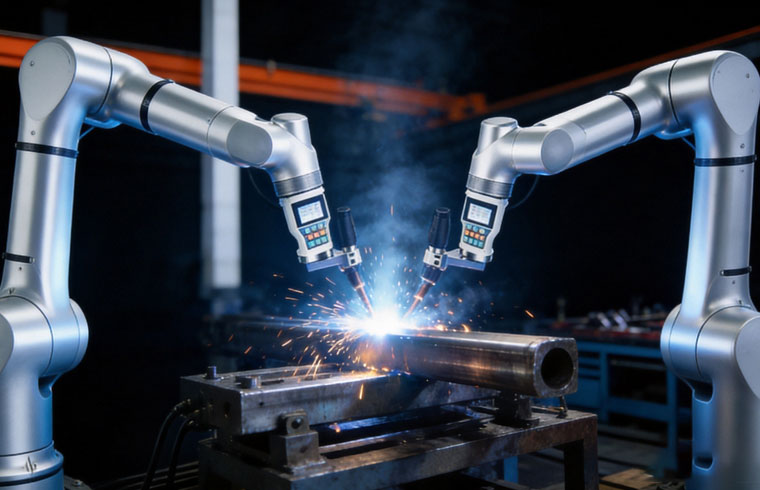
The future of robotic arc welding is increasingly connected with sensing, digital models, adaptive path control, and more flexible programming.
Traditional robotic welding depends heavily on predefined points and stable workpiece positioning.
Newer systems can use more information about the actual part.
A digital model may define the expected geometry. Vision can locate the real component. Seam sensing can identify the actual joint. The robot can then execute a validated welding process along a corrected path.
This does not remove the need for good manufacturing discipline.
Fixtures, joint preparation, welding procedures, and component accuracy remain essential.
The difference is that robotic systems are becoming better at managing known variation instead of requiring every workpiece to match one perfect nominal position.
For manufacturers working with multiple product variants, this flexibility can make robotic arc welding practical in applications that were once difficult to automate efficiently.
Conclusion
Robotic arc welding improves repeatability because it replaces variable manual torch movement with controlled robot motion, programmed welding sequences, stable process parameters, and repeatable workpiece positioning.
But the robot is only one part of the result.
Fixture accuracy, joint preparation, workpiece tolerances, welding parameters, torch condition, positioners, and sensing all contribute to whether the process can be repeated successfully.
The strongest robotic arc welding systems are therefore built around a simple principle: control what can be controlled, measure the variation that remains, and give the robot enough information to respond within validated limits.
When the entire process is designed around those conditions, robotic arc welding can provide a stable foundation for consistent industrial welding across repeated production cycles.
FAQ
What is robotic arc welding?
Robotic arc welding uses a programmable robot to control the welding torch along defined joints while the welding system manages the arc and process parameters. Fixtures, positioners, sensors, and cell controls can also be integrated to improve repeatability and handle controlled production variation.
Why is robotic arc welding more repeatable?
The robot can reproduce the same programmed travel speed, torch position, orientation, and welding sequence across repeated cycles. Repeatability still depends on stable fixtures, joint preparation, workpiece dimensions, welding parameters, wire delivery, and equipment condition.
Can robotic arc welding handle workpiece variation?
Yes, when the variation remains within controlled limits. Fixed-path systems work best with repeatable parts, while seam sensing or vision can detect some changes in real joint position and allow the robot to correct its path within a validated process range.
Is robotic arc welding suitable for high-mix manufacturing?
It can be. Flexible fixtures, stored programs, sensing, positioners, and teach-free programming can make robotic arc welding suitable for multiple product families. The strongest applications have structured variation rather than completely unpredictable workpiece geometry.
What should be checked before using robotic arc welding?
Review joint geometry, part variation, fixture accuracy, torch access, welding procedures, robot reach, positioner requirements, production sequence, and sensing needs. The complete work cycle should be evaluated so that the robot is integrated around real manufacturing conditions.
Need Help Choosing the Right Robotic Arc Welding Solution?
If you’re evaluating robotic arc welding for repeated joints, complex workpieces, variable production, or intelligent welding automation, SHUIPO can help assess your welding process, fixtures, positioning, sensing requirements, and production workflow. Contact SHUIPO for a technical consultation and develop an automation approach around your actual manufacturing requirements.