
Table of Contents
Introduction
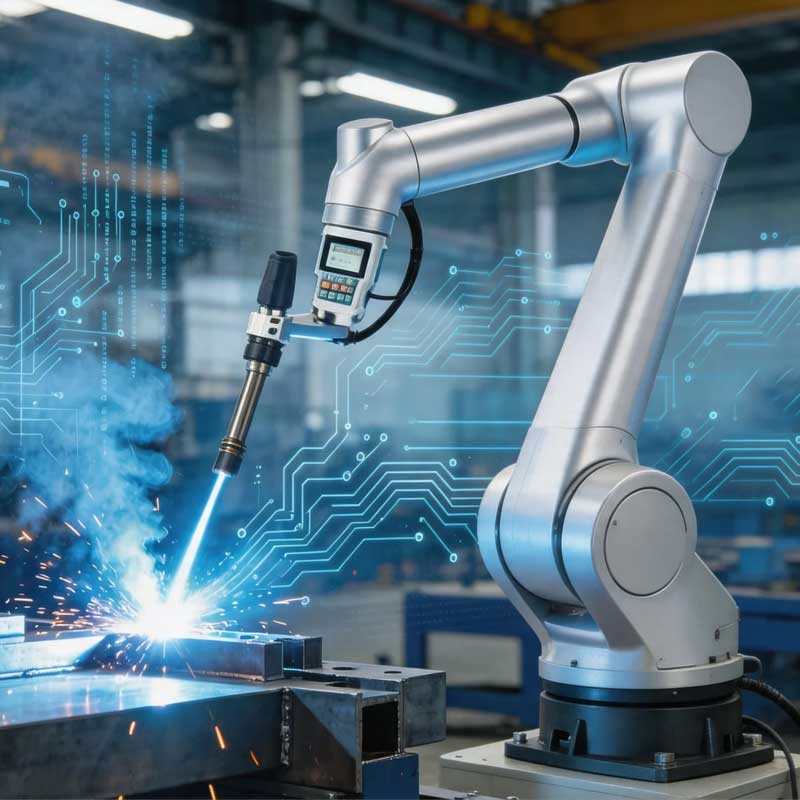
Robotic TIG welding is becoming increasingly relevant in manufacturing environments where weld appearance, heat control, repeatability, and process stability matter as much as production speed. TIG welding has long been valued for its ability to produce clean, controlled welds, but the process also demands precise torch positioning, stable travel speed, and careful control of the welding conditions. These requirements make it a natural candidate for automation when the workpiece and production process are suitable.
The important change is not simply that a robot can hold a TIG torch. Modern robotic TIG welding systems can combine controlled robot motion with workpiece positioning, seam sensing, digital welding parameters, and increasingly adaptive process logic. This allows manufacturers to approach TIG automation as a complete production system rather than as a replacement for a welder’s hand movement.
For manufacturers evaluating robotic TIG welding in 2026, the useful question is therefore not whether TIG welding can be automated. It is where automation creates the greatest technical value, what conditions must be controlled, and how much flexibility the process needs to handle real production variation.
What Is Robotic TIG Welding?
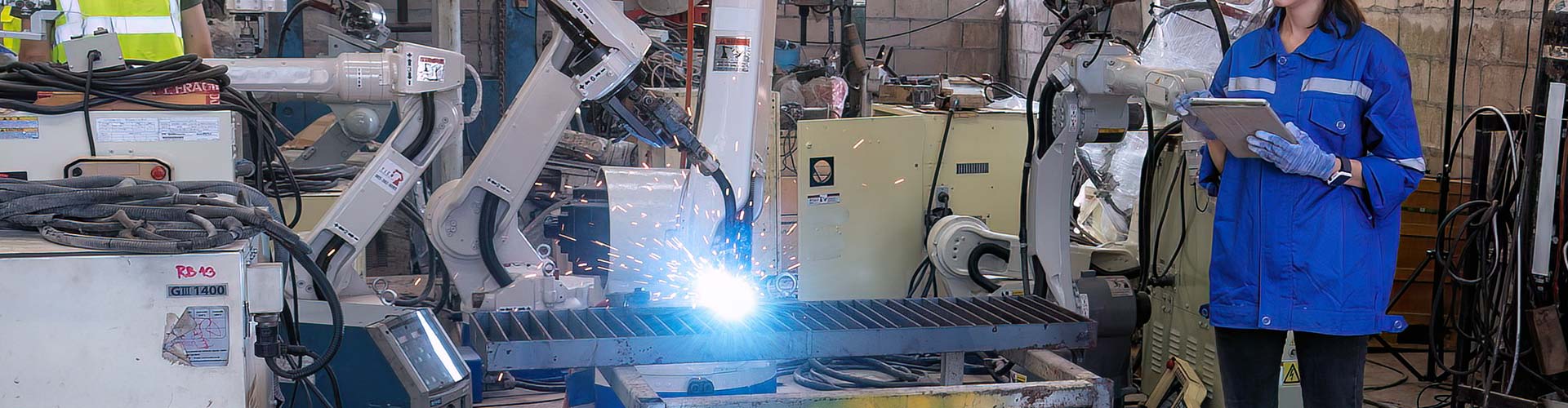
Robotic TIG welding combines an industrial robot or collaborative robot with the TIG welding process, also known as gas tungsten arc welding. The robot controls the movement and orientation of the welding torch while the welding system controls parameters such as current, shielding gas, arc initiation, and other process variables.
Unlike some welding processes that rely on a continuously fed consumable electrode, TIG welding uses a non-consumable tungsten electrode to create the arc. Filler material may be added separately when the application requires it. This makes the relative position between the torch, filler material, and weld joint especially important.
In manual TIG welding, an experienced operator constantly makes small corrections. Torch angle, arc length, travel speed, and filler positioning may change from moment to moment. In a robotic system, these actions must be translated into repeatable robot paths, process parameters, fixtures, sensors, and control logic.
That difference explains why a successful robotic TIG welding application usually begins with process analysis rather than simply selecting a robot.
Why TIG Welding Is Well Suited to Robotic Control
TIG welding benefits from consistency.
The process performs best when torch position, arc length, travel speed, and workpiece geometry remain within a controlled operating window. These are exactly the types of variables that robotic systems can reproduce accurately once the process has been validated.
A robot does not become tired during a long welding sequence and does not intentionally change its travel speed from one part to the next. When the fixture locates the component correctly and the joint remains consistent, the robot can reproduce the same movement across repeated production cycles.
This is particularly valuable for applications where weld appearance and dimensional control are important.
However, robotic repeatability should not be confused with automatic quality.
If the workpiece moves, the gap changes, the joint location shifts, or the fixture introduces variation, the robot may continue following the programmed path unless the system has a way to detect and compensate for that difference.
The strongest robotic TIG welding applications therefore combine repeatable robot motion with controlled upstream production.
Robotic TIG Welding vs Conventional Automated Welding
Robotic TIG welding is one form of welding automation, but its process characteristics create different engineering priorities from other automated welding methods.
| Factor | Robotic TIG Welding | General Automated Welding |
|---|---|---|
| Arc control | Requires very stable torch-to-work distance | Depends on the welding process |
| Weld appearance | Often selected where clean, controlled welds are important | Appearance requirements vary |
| Heat input management | Precise control is especially important | Process dependent |
| Filler addition | May require separate wire positioning | Frequently integrated directly into the torch process |
| Joint tolerance | Can be sensitive to gap and alignment variation | Some processes tolerate wider variation |
| Robot path accuracy | Highly important | Important across most automated welding |
| Typical automation focus | Precision and repeatability | Productivity, repeatability, or both |
| Sensing value | High when joint position varies | Application dependent |
This comparison shows why robotic TIG welding should not be treated as a generic robot application. The welding process itself must guide robot selection, fixture design, sensing strategy, and programming.
Precision Starts With the Workpiece, Not the Robot
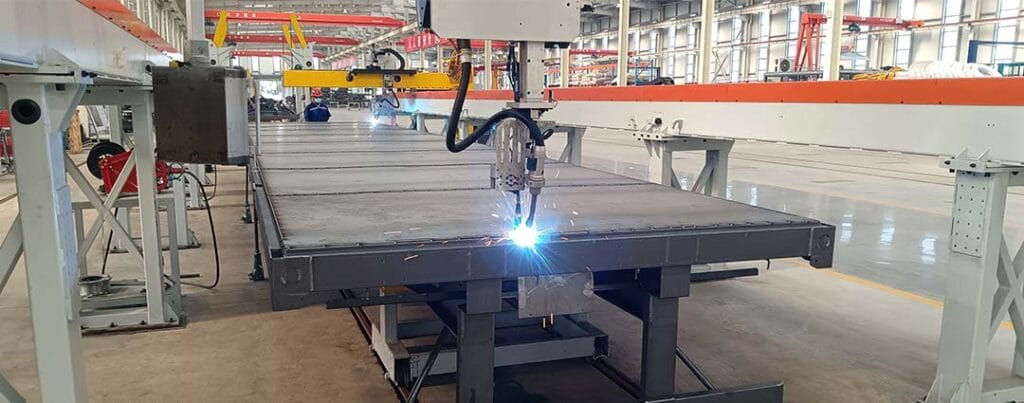
One of the most common mistakes in welding automation is assuming that a highly accurate robot can correct an inconsistent manufacturing process.
It cannot do so without information.
Consider two parts that appear identical on the drawing but arrive at the welding station with different joint gaps or slightly different edge positions. The robot may repeat its programmed path perfectly while the actual weld joint has moved away from that path.
For robotic TIG welding, this can be especially significant because stable torch position relative to the joint strongly influences the arc.
Manufacturers should therefore evaluate several upstream conditions before automation:
Part dimensions should remain within a realistic and controlled tolerance range. Joint preparation should be repeatable. Fixtures should locate components consistently. Clamping should prevent movement during welding without creating unnecessary distortion. The robot must also be able to reach the joint at an appropriate angle throughout the weld.
When these conditions are controlled, robotic repeatability becomes extremely valuable.
When they are not controlled, more sensing or adaptive technology may be required.
The Growing Role of Vision and Seam Sensing
Fixed programming works well when every part arrives in nearly the same position. Real manufacturing is often less predictable.
Joint locations can vary slightly because of component tolerances, fixture variation, assembly differences, or thermal effects. For this reason, sensing is becoming increasingly important in robotic welding.
A vision system can identify features on the workpiece before welding begins. Seam tracking can help determine where the actual joint is located relative to the programmed path. In more advanced applications, sensor information can be used to correct the robot trajectory before or during welding.
The key advantage is not that vision makes part accuracy unnecessary.
Rather, it increases the amount of controlled variation the robotic system can manage.
For robotic TIG welding, this matters because small positional changes can influence arc stability and weld placement. A properly integrated sensor therefore provides the robot with information that a manual welder would normally obtain visually.
How Robotic TIG Welding Handles High-Mix Production
Traditional robotic welding has often been associated with highly repetitive manufacturing. If every workpiece is identical and production runs are long, programming a fixed robot path is straightforward.
High-mix production creates a different challenge.
A factory may produce several components with different joint locations, weld lengths, geometries, and orientations. If every change requires extensive manual robot teaching, automation becomes less flexible.
This is where newer programming methods, offline path planning, visual identification, and teach-free concepts become increasingly important.
Instead of treating every new component as a completely new robot program, manufacturers can structure welding information around part geometry, joint recognition, welding procedures, and reusable process logic.
For water tanks, frames, machinery components, structural fabrications, and other variable products, the question becomes:
Can the system identify enough information about the workpiece to generate or adjust an appropriate welding path?
SHUIPO’s welding automation products and robotic systems are built around this broader system approach, where robots, positioning, sensing, and production requirements must work together rather than operate as isolated equipment.
Torch Position, Arc Length, and Robot Motion
Robot motion has a direct relationship with TIG welding stability.
The torch must remain at an appropriate orientation relative to the joint. If the robot changes direction through a curved or three-dimensional seam, the wrist orientation may also need to change continuously.
This becomes especially important for complex components.
A straight weld on a flat panel may require relatively simple motion. A circumferential weld, curved structure, pipe intersection, or three-dimensional frame can demand coordinated movement between the robot and a workpiece positioner.
The objective is not simply to reach the weld.
The robot must maintain a practical welding orientation while avoiding collisions and staying within its preferred working range.
For this reason, simulation and reach analysis should be performed before the final cell layout is fixed. Robot reach, wrist configuration, torch length, fixture geometry, and part positioning all influence whether the welding path can be executed smoothly.
Filler Wire Control in Robotic TIG Welding
Filler wire introduces another layer of complexity.
In manual TIG welding, the operator can adjust the relationship between the torch and filler material continuously. A robotic system must reproduce that relationship mechanically.
Depending on the application, filler wire may be delivered through a separate feeding system positioned relative to the torch. The wire angle, feeding direction, contact position, and synchronization with robot travel need to remain stable.
This becomes more challenging when the welding path changes direction.
If the robot follows a complex three-dimensional joint, the relative position of the wire and weld pool must still be maintained. Tool orientation and motion planning therefore need to account for more than the tungsten electrode alone.
This is one reason robotic TIG welding should be engineered around the complete welding process rather than around robot reach alone.
Heat Management and Distortion
TIG welding provides controlled heat input, but thermal behavior still matters in automated production.
Repeated welding can gradually raise component temperature. Long seams may introduce distortion. Thin components can respond differently from thicker structures, and a welding sequence that works for one geometry may not be appropriate for another.
Robotic systems offer an important advantage here: welding sequences can be programmed consistently.
Instead of allowing each operator to decide where to begin and which seam to complete next, engineers can validate a sequence designed to manage heat distribution and reproduce it across production.
Where necessary, the sequence can alternate between different weld locations or allow defined intervals between operations.
This type of repeatability is one of the less visible advantages of robotic TIG welding. The robot is not only repeating individual weld movements; it can also repeat an entire thermal strategy for the workpiece.
When Robotic TIG Welding Makes the Most Sense
Robotic TIG welding is particularly suitable when the manufacturing process contains a high level of repeatability but still requires precise weld control.
Typical candidates include components with repeated joint geometry, assemblies where visual weld consistency is important, and production processes where the same welding sequence is performed frequently.
A strong automation candidate normally has several characteristics.
The workpiece can be located reliably. Weld joints are accessible. Joint preparation is controlled. Required welding procedures are already reasonably stable. The production process includes enough repeated work to justify structured automation.
Applications with these characteristics allow the robot to do what it does best: repeat a validated process.
On the other hand, if every workpiece is completely different, repair decisions must be made continuously, or joint conditions cannot be identified reliably, manual TIG welding may still offer greater practical flexibility.
Where Robotic TIG Welding Can Struggle
Robotic automation has limits, and identifying them early improves project reliability.
Large fit-up variation is one important challenge. If the robot cannot identify the actual joint location, even a small shift can affect weld placement.
Accessibility is another. A welder can sometimes change body position and torch angle intuitively to reach a difficult joint. A robot is limited by joint ranges, collision boundaries, torch geometry, and cell layout.
Surface condition can also influence the process. Automated welding assumes that preparation and cleanliness remain within the expected process window.
Finally, automation exposes inconsistencies that manual operators may have been correcting without documenting them.
This can initially make automation appear less flexible. In reality, the robot is often revealing variation that was already present in the manufacturing process.
Recognizing those variations creates an opportunity to improve the process itself.
Robotic TIG Welding and Intelligent Process Adaptation
The next stage of robotic TIG welding is not simply faster robot movement. It is better process awareness.
A conventional system follows a predefined path.
An intelligent system can use sensor information to determine whether the actual workpiece differs from the expected geometry and then adjust its behavior within defined limits.
This may include correcting seam position, modifying torch orientation, selecting a different path, or flagging a component that falls outside acceptable conditions.
The important distinction is that adaptive welding should remain controlled.
A reliable industrial system does not allow the robot to change parameters unpredictably. Instead, engineers define appropriate operating boundaries and use sensing to select or adjust within those validated limits.
This combines the repeatability of automation with some of the responsiveness traditionally associated with skilled manual welding.
How to Evaluate a Robotic TIG Welding Project
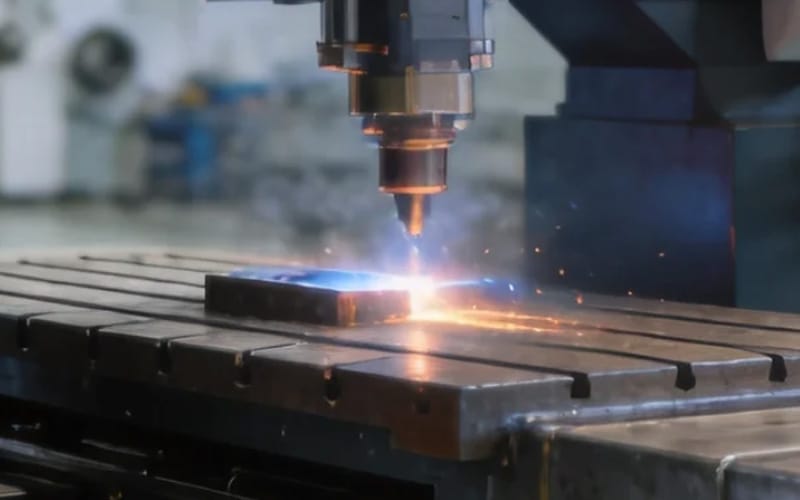
A useful project evaluation begins with the part and process, not with a robot model.
Start by identifying the actual weld joints. Record their lengths, orientations, access requirements, joint types, and expected dimensional variation.
Next, examine the complete work cycle.
How is the component loaded? How is it located? Does it need to rotate during welding? Are there welds on multiple sides? Can a positioner reduce difficult robot orientations? Does the component distort as welding progresses?
Then study process variation.
If seam position changes from part to part, determine whether better fixtures can control the difference or whether a sensing system is needed.
Finally, consider future production. A cell designed around one highly specific part may become restrictive when the product range changes. Modular fixtures, adaptable positioners, flexible robot programming, and sensing can improve the system’s ability to handle future variants.
This evaluation often determines project success more clearly than comparing robot specifications alone.
Conclusion
Robotic TIG welding is evolving from fixed-path automation toward more flexible, sensor-aware welding systems. The fundamental strengths remain the same: controlled motion, repeatable welding parameters, consistent sequencing, and reduced dependence on continuous manual torch manipulation.
What is changing is the system’s ability to manage real manufacturing variation.
Vision sensing, seam recognition, improved path planning, workpiece positioning, and adaptive control are making it possible to apply TIG automation to a wider range of components than traditional fixed programming allowed.
The strongest results still come from sound welding engineering. Stable parts, appropriate fixtures, accessible joints, validated welding procedures, and realistic process tolerances remain essential.
For manufacturers considering robotic TIG welding, the most important question is not whether a robot can perform the weld. It is whether the complete production process can provide the robot with enough consistency and information to perform that weld reliably again and again.
FAQ
What is robotic TIG welding?
Robotic TIG welding uses a programmable robot to control TIG torch movement and welding position. It combines repeatable robot motion with controlled welding parameters and can also use fixtures, positioners, vision systems, and seam sensing to manage industrial welding tasks.
What are the main advantages of robotic TIG welding?
The main advantages are repeatable torch movement, stable welding sequences, consistent process execution, and reduced operator involvement in repetitive welding. Its effectiveness depends on reliable part positioning, joint consistency, appropriate fixtures, and validated welding parameters.
Can robotic TIG welding handle part variation?
Yes, within controlled limits. Fixed-path systems require highly repeatable parts, while systems equipped with vision or seam sensing can identify some changes in joint position and adjust the welding path. Very large or unpredictable variations may still require process changes or manual intervention.
Is robotic TIG welding suitable for complex welds?
It can handle complex welds when the robot has sufficient reach, suitable torch orientation, collision-free access, and an appropriate positioning system. Curved seams and multi-sided components may require coordinated movement between the robot and a workpiece positioner.
What should be checked before automating TIG welding?
Evaluate joint repeatability, part tolerances, fixture accuracy, torch access, welding sequence, filler wire requirements, distortion, loading method, and production variation. A successful system should be designed around the complete welding process rather than the robot alone.
Need Help Choosing the Right Robotic TIG Welding Solution?
If you’re unsure how robotic TIG welding can fit your production process, our team can help evaluate your workpieces, joint conditions, fixture requirements, robot reach, sensing needs, and production workflow. SHUIPO develops welding automation solutions for a range of industrial applications. Contact SHUIPO for a technical consultation and determine the right automation approach for your welding process.